
By TurtlesEgg Editorial Team
Reviewed for editorial clarity and search accuracy by the TurtlesEgg Health Content Review Team
This article is for general informational purposes only and is not medical advice. Nutrition needs vary by person, activity level, medical history, and dietary pattern. For individualized advice, speak with a physician or registered dietitian.
Best High-Protein Chocolate Snacks for Busy Days
Quick answer
The best high-protein chocolate snacks for busy days are the ones that combine useful protein, manageable sugar, real portability, and enough taste appeal that you will actually keep eating them. In practical terms, that usually means ready-to-eat chocolate snacks with about 10 grams or more of protein per serving and a nutrition profile that still behaves like a snack, not a disguised dessert. For readers comparing formats more directly, our guides on protein brownie vs protein bar, high protein brownie snack, and high-protein chocolate snack ideas provide useful companion context.
A practical target for many shoppers is 10 to 20 grams of protein, with sugar and calories kept in a range that still feels like a functional snack rather than a mini dessert. Harvard Health notes that protein-rich snacks can help keep hunger in check when they replace less satisfying options, which is exactly the role these snacks need to fill on rushed days. See Harvard Health on high-protein snacks. Healthline also highlights that some better-balanced chocolate snack options can stay under 200 calories while still delivering useful protein. See Healthline’s roundup of healthier chocolate snacks.
The most useful buying screen is simple: meaningful protein, controlled sugar and calories, packaging that survives real movement, and enough satisfaction to replace the impulse candy purchase. If a snack looks strong on the label but melts easily, crumbles in a bag, or tastes overly “functional,” it often loses in real life.
Methodology
This article evaluates high-protein chocolate snacks through a real-use framework rather than a brand-hype lens. The comparison basis used here is five-part: protein per serving, sugar and calorie balance, portability, ingredient fit, and repeat-use realism. That matters because a snack can look impressive on the front of the wrapper and still fail in a desk drawer, gym bag, commute, or rushed afternoon.
The examples in this article are directional buying scenarios, not laboratory tests or proprietary performance claims. The goal is to help readers compare what actually matters when choosing ready-to-eat chocolate protein snacks for busy days.
Key takeaways
- Protein grams alone do not decide the winner: sugar, calories, texture, and portability change whether a snack works in real life.
- Busy-day snacks need to survive actual use: desk storage, commuting, mild heat, and bag travel matter more than many labels admit.
- Format changes the experience: brownies may win on satisfaction, while bars and clusters often win on portability. See protein brownie vs protein bar for a deeper format comparison.
- Protein brownies deserve separate scrutiny: some act like real snacks, while others are closer to dessert with a protein halo. Our guide to a high protein brownie snack goes deeper on that format.
- Specialty chocolate snacks can be useful: bites, clusters, bars, and brownie-style products all solve slightly different problems.
- The smartest buy is usually the one you will actually finish: adherence matters as much as label quality.
What makes a high-protein chocolate snack worth buying
A useful high-protein chocolate snack has to do more than sound healthy. It needs to bridge hunger, travel well enough for daily use, and feel satisfying enough that you do not immediately go looking for something else. That is why this category works best when judged as a functional snack category, not as candy with better packaging.
The best products usually balance three things at once: a protein amount that is meaningful for a snack, a sugar and calorie profile that still fits the moment, and a taste and texture that encourage repeat use. If one of those breaks down, the snack often becomes a one-time trial rather than a lasting routine upgrade.
Nutritional comparisons of different protein sources
Protein source still matters, but usually less than people think. Whey-based products often appeal to shoppers who want a familiar, widely used protein source with a strong protein density. Plant-based versions can work well for dairy-free shoppers or for readers who simply tolerate them better. The smarter question is not which source sounds best in theory. It is which source fits your digestion, preferences, and everyday routine.
In practical terms, many high-protein chocolate snacks fall into the 10 to 20 gram range per serving. That can be enough to make them more useful than ordinary sweets, especially when the rest of the label is sensible. The broader category view in high-protein chocolate snack ideas is useful here because it shows how wide the range can be across different formats.
1. Protein brownies that act like a real snack, not candy
Start with protein, but do not stop there. Check protein grams per serving, then compare sugar, total calories, and serving size on the same panel. A useful meal bridge often lands around 180 to 250 calories with enough protein to create staying power. Healthline’s roundup of healthier chocolate snacks notes that many better-balanced options stay under 200 calories while still delivering meaningful protein. See Healthline.
Ingredient order matters too. If sugar or syrup appears before major protein sources, that is often a clue the brownie leans treat-first. A low-sugar protein brownie does not need to be joyless. It just needs a label that supports satiety instead of a quick spike and crash. Readers who want a more focused breakdown of this format can use our guide to a high protein brownie snack.
When a brownie works best
Brownies usually work best when satisfaction matters at least as much as portability. A softer, richer texture can feel more rewarding than a dense bar, which may improve consistency for people who keep abandoning more “functional” snacks. A relevant real-world example is the Death By Chocolate Protein Brownie, which is the kind of product that should be judged by protein, sugar, calories, and repeat-use appeal rather than by brownie branding alone.
Product example in context
Death by Chocolate Protein Brownie
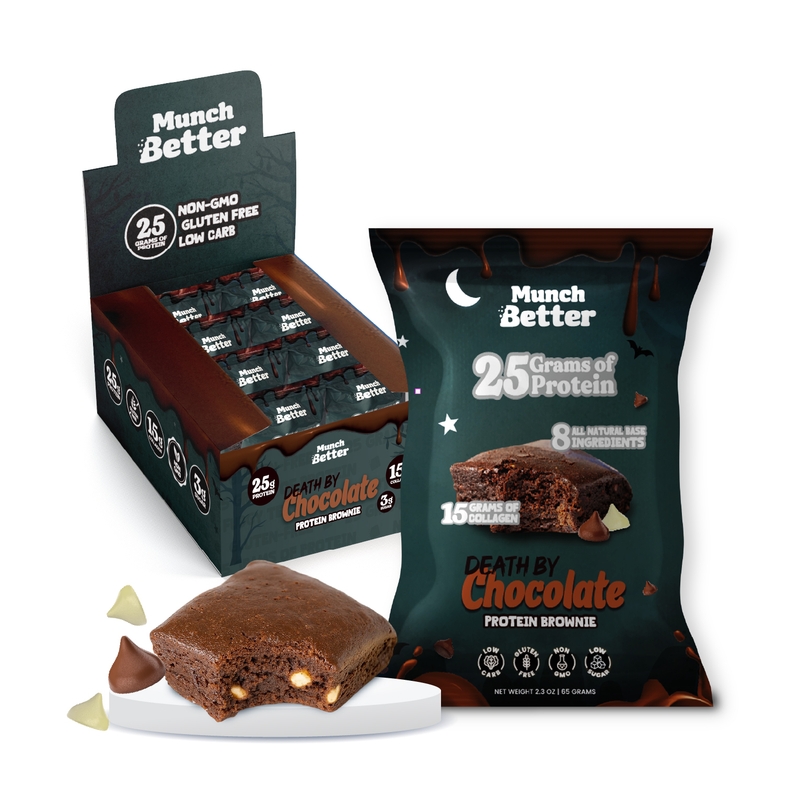
This is a useful example of a brownie-style snack for readers who want to compare a softer, dessert-leaning format against the criteria in this article. The right way to judge it is the same way you should judge any product in the category: protein per serving, sugar, calories, serving size, portability, and whether you would realistically choose it again.
Why clusters often travel better
Crunchy clusters and bites solve a different problem. They tend to hold their shape better than softer snacks, which makes them more practical for a backpack, desk drawer, or commute. That can matter more than people expect. The best busy-day snack is often the one that still feels intact and appealing after a week in storage or a rough afternoon in a bag.
When a bar beats a brownie
Bars usually win when movement and timing matter most. They fit cup holders, backpacks, and gym bags more easily than softer chocolate snacks, and they often handle warmer conditions more reliably. For post-workout use, the best choice is still the one with enough protein, moderate sugar, and easy digestibility, but the bar format often has an edge on structure alone.
That is why the right comparison is usually purpose-based, not format-based. If your main concern is bag convenience and heat tolerance, bars often win. If your main concern is dessert-level satisfaction with credible macros, brownies may be stronger. For the direct side-by-side version of that decision, see protein brownie vs protein bar.
Where bars fall short on taste or texture
Bars can still lose on repeat use if they feel chalky, sticky, overly sweet, or strangely dense. That is where real-life buying behavior matters. A snack that survives the commute but never gets finished is still a weak purchase. The practical order of operations is simple: check protein and calories first, then sugar, then portability, then satisfaction. That turns label reading into a decision tool instead of a guess.
Whey vs plant-based chocolate snacks by real-world use
Plant-based snacks often fit better for vegan shoppers, dairy avoiders, or readers who simply digest whey less comfortably. Whey-based products may offer stronger protein density in some cases, but that advantage matters less if the snack does not sit well or does not match the role you need it to play. A slightly lower protein density can be a reasonable tradeoff when the product is easier to tolerate and still satisfies the craving.
Texture, digestion, and taste tradeoffs
Regular sweets still have a place. If what you want is a true dessert after dinner, a conventional treat may simply be the clearer choice. The problem shows up when that same choice becomes your default emergency food during workdays or travel. In those moments, protein-forward chocolate snacks often bring more staying power than candy or pastries, provided the taste and texture still make sense.
How substitution changes buying decisions
Consistency usually comes down to location, not intention. If the right snack is not where the craving happens, the backup plan becomes whatever is closest. A useful stocking plan reduces friction. That often matters more than having the technically “best” product sitting untouched at home.
Where to keep snacks for the highest follow-through
Desk drawers, backpacks, gym bags, and car storage each reward slightly different formats. Bars and clusters often handle those environments better than softer snacks, while brownies can make more sense at home, at work, or anywhere the texture advantage matters more than rugged portability. A few snacks almost make the main list because they excel in one category but miss in another. That does not make them weak. It just means they fit narrower jobs. The Death By Chocolate Protein Brownie is a good example of a format that may win on satisfaction even if a bar still wins on rough travel.
Shelf-stable options with lower dessert appeal
For specialty shoppers, gluten-free and plant-based chocolate snacks can be strong picks when dietary fit matters more than maximum protein density. Just expect tradeoffs in texture, price, or portability, and verify labels carefully rather than assuming every specialty-marketed snack is automatically balanced.
Frequently Asked Questions

Yes, but only if the snack genuinely feels satisfying. Texture, sweetness, and chocolate flavor matter because the practical goal is replacement. A good high-protein chocolate snack should still fit your nutrition goals, which means checking protein, sugar, and calories in the same frame.
Are high-protein snacks good for weight loss?High-protein snacks do not directly cause weight loss, and they should not be treated as a stand-alone strategy. However, they may support satiety and calorie management when they replace less satisfying sweet snacks. The practical takeaway is narrower: if you often buy sugary convenience snacks during rushed windows, a more satisfying protein-forward option can be a smarter substitution.
What are gluten-free high-protein snacks?They are protein-forward snacks made without gluten-containing ingredients and labeled to meet gluten-free requirements where applicable. For people who need that filter, it matters. For everyone else, it is just one criterion among several. The stronger buying question is still whether the snack delivers meaningful protein, reasonable sugar, and a format you will realistically keep using.
Harvard Health notes that protein-rich snacks can help reduce overall calorie intake in some situations. See Harvard Health. The practical takeaway is narrower: if you often buy sugary convenience snacks during rushed windows, a more satisfying protein-forward option can be a smarter substitution.
Limitations and scope
This article is a practical buying guide, not a medical advice piece or a lab-tested ranking of every product in the category. Labels, formulations, and product availability change over time. What works best will also depend on appetite, schedule, dietary needs, and how the snack fits into the rest of your day.
Use the scorecard in this article, then build a simple stocking plan around your real weak spots: desk, commute, gym bag, or home. If you want to compare distinctive snack brands, specialty options, and lower-sugar choices in one place, TurtlesEgg can help you discover new picks while earning rewards. For adjacent reading, explore high-protein chocolate snack ideas, the brownie-specific guide to a high protein brownie snack, and the direct format comparison in protein brownie vs protein bar.