
Choosing the right portion cups for takeout helps keep sauces separate and meals neatly packed. A takeout order can look perfect when it leaves the kitchen, then arrive with dressing across the salad or dipping sauce on the fries. Often, the problem is the small cup tucked beside it: too full, poorly sealed or the wrong size for the job.
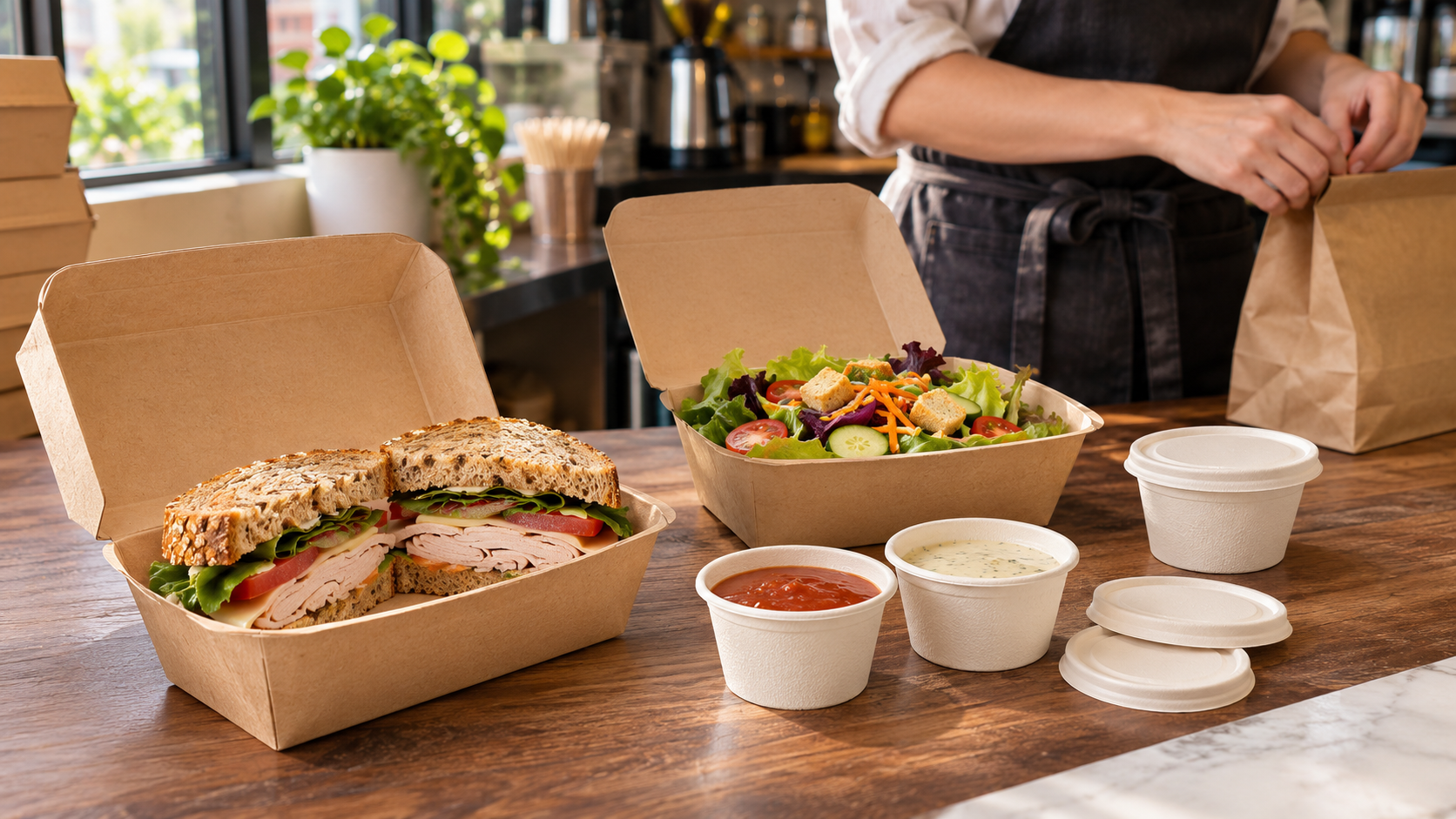
For cafés, delis, food trucks, restaurants and caterers, choosing portion cups for takeout is a small purchasing decision with a noticeable effect on service. The right cup keeps extras separate, helps staff serve consistent portions and makes food easier for customers to enjoy. You do not need the most expensive option; you need one that fits your menu and your workflow.
Quick answer: Start with the amount you actually serve, then check that the lid fits securely, the material suits the food and temperature, and the pack size matches your weekly demand. Test the cup in a real takeaway bag before ordering in bulk. A 4 oz cup is a useful example for many generous sauce or side portions, but it is not the right size for every condiment.
Why Portion Cups Matter More Than They Seem
A portion cup does three jobs at once. It separates a wet ingredient from food that should stay crisp, makes serving quantities easier to repeat and helps a packed order travel neatly. Think of a sandwich with dressing on the side, a grain bowl with a separate sauce, or a catering tray with individual dips. Each becomes simpler to assemble when the staff knows which cup and lid to reach for.
Step 1: Choose the Size Around the Serving
Cup capacity and serving size are not the same thing. A container labeled 4 oz describes its nominal capacity, not a promise that every thick dressing, salsa or sauce should be filled to the edge. Leave practical headspace for the lid and for movement during delivery. If your kitchen uses weight-based recipes, portion by weight and confirm the resulting volume in the actual container.
When a Smaller Cup Makes Sense
A smaller cup can work well for ketchup, mustard, hot sauce, sample tastes or a modest dressing add-on. For example, TurtlesEgg carries a 2 oz compostable souffle cup with lids in a 200-piece listing. That size may be a better starting point when the condiment is meant to complement the meal rather than act as a separate side.
When a 4 oz Cup Is Useful
A 4 oz option gives more room for a generous dip, salsa, slaw, fruit sample or salad dressing. The 4 oz compostable white souffle cups with lids, 50-piece pack listed on TurtlesEgg offer a concrete example: the seller, EcoQuality Inc, describes sugarcane-bagasse cups and includes lids. Check the latest listing for the exact specifications and availability rather than assuming every four-ounce cup is built alike.
Do a simple menu test. Fill a sample with the portion you usually serve, close it, and set it next to the actual meal. Ask whether the customer receives enough, whether the cup wastes space in the bag, and whether the lid closes without pushing food into the rim. That is more useful than choosing on ounce count alone.
Step 2: Treat the Lid as Part of the Product
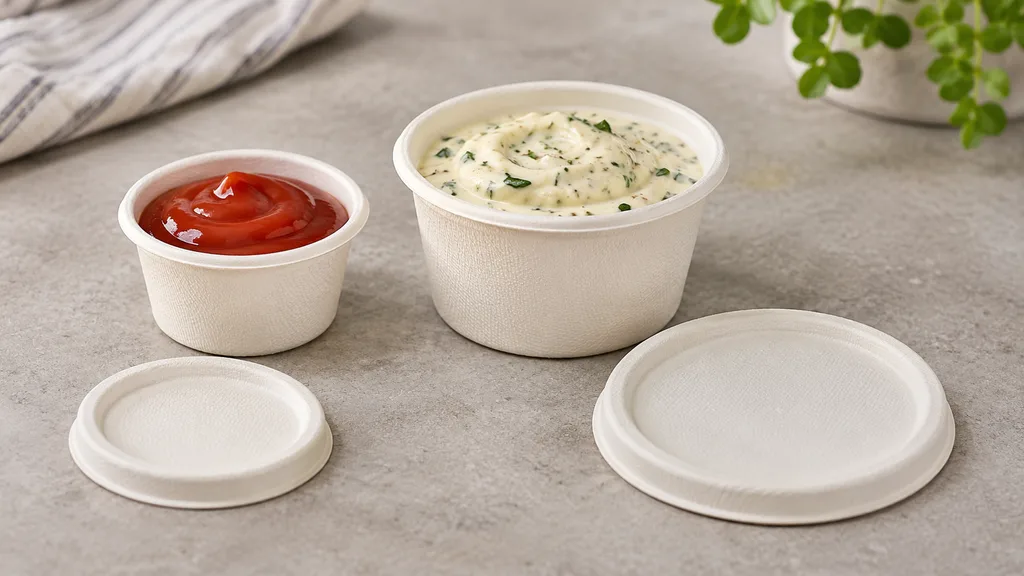
A cup with an unreliable lid can cost more in refunds, remakes and messy bags than it saves at purchase. Confirm whether lids are included, whether they match that exact cup model and whether they snap or press into place without special effort. A tight lid is helpful, but no disposable cup should be described as spillproof unless the maker has tested and stated that performance.
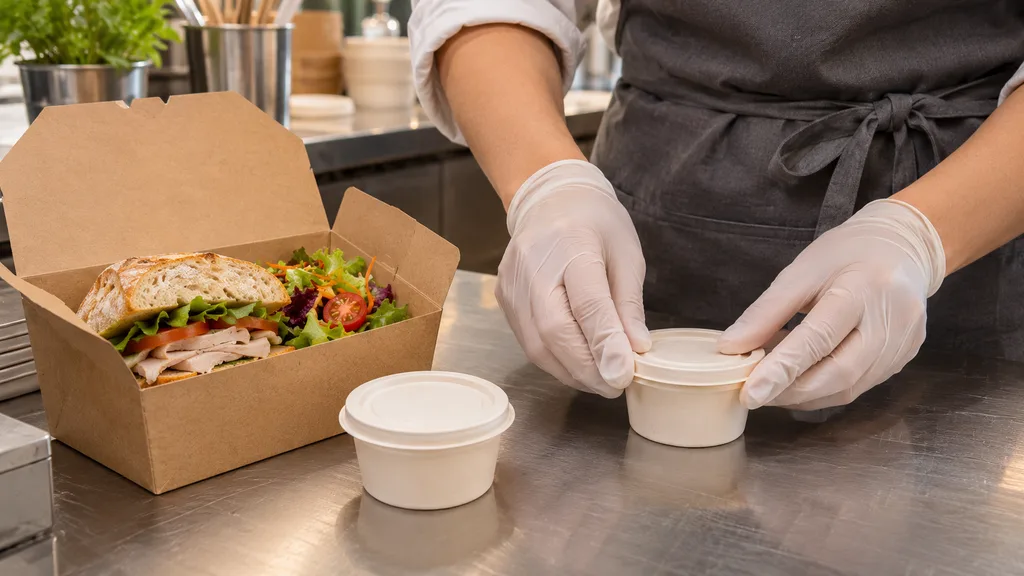
Try the same handling your order will face: gently tip the closed cup, place it in a bag beside other containers, carry it across the room and open it again. Watch for liquid along the rim, cracking, bent lids or sauce trapped in the sealing area. Thick dips, thin dressings and oily condiments may behave differently, so test more than one recipe.
Step 3: Match Material to Food and Temperature
Different foods put different demands on packaging. Cold ranch dressing, warm cheese sauce, oily chili crisp and acidic vinaigrette are not interchangeable test cases. Before buying, check the supplier’s stated food-contact use, temperature range, resistance to moisture and grease, and any limits on reheating or freezing.
The U.S. Food and Drug Administration explains that food-contact materials are evaluated for intended uses. Its food types and conditions-of-use reference distinguishes among food properties and situations such as hot filling, room-temperature use and refrigeration. In everyday terms: a cup suitable for cold dressing is not automatically approved for piping-hot sauce or microwave reheating.
If the listing is unclear about heat, ask the seller before using the cups for hot service. Never promise customers that a disposable container can go into a microwave, freezer or oven unless the product instructions explicitly allow it.
Step 4: Understand What “Compostable” Actually Means
Material choice can be part of a thoughtful packaging plan, but environmental language deserves care. The TurtlesEgg 4 oz listing describes its cups as made from bagasse, or sugarcane fiber, and calls them compostable. That is a seller-provided product claim; the listing alone should not be treated as proof of a particular third-party certification or a guarantee that the cup and its lid will compost in every location.
The Federal Trade Commission’s Green Guides say compostability claims need evidence and appropriate qualifications. The Environmental Protection Agency’s food-serviceware guidance advises checking whether a local commercial composting facility actually accepts the material and whether collection is available. A label is only one piece of the disposal question.
For a business, the practical questions are straightforward: What are the cup and lid made from? Are both accepted by the same local program? Is there an applicable certification? How will customers dispose of them? Even a plant-based container should not be called home-compostable without clear support; EPA home-composting guidance cautions against adding typical compostable food-serviceware to backyard piles.
Step 5: Choose Pack Quantities That Fit the Workweek
The lowest price per cup is not always the best buying decision for a small kitchen. A huge case can tie up shelf space and cash, while a tiny pack can run out just as the lunch crowd arrives. Estimate demand from real sales: the number of orders that need a condiment cup, multiplied by cups per order, multiplied by service days. Add a modest buffer for catering orders, spills and busy weekends.
Suppose a deli uses about 75 cups a day across six service days. That is 450 cups a week before adding a buffer. A trial pack might be useful for lid and recipe testing, but regular service will need a larger restocking plan. Alongside the 50-piece option, TurtlesEgg lists 4 oz cups with lids in a 200-piece pack and a separate 100-piece 4 oz listing. Compare current price per usable cup, not just the advertised pack price.
A Practical Portion-Cup Buying Checklist
- Serving fit: Measure your actual sauce or side portion and allow room to close the lid.
- Lid fit: Confirm lids are included, compatible and quick for staff to apply.
- Food suitability: Check the product’s approved uses for hot, cold, oily and acidic foods.
- Transport test: Place a filled cup inside your real bag or delivery setup and check for leaks.
- Material claims: Verify compostability details and local disposal options instead of relying on broad labels.
- Stock planning: Estimate weekly demand, compare cost per usable cup and keep a sensible buffer.
Everyday Uses Beyond Sauce on the Side
Portion cups are useful anywhere small servings need their own space. A breakfast café might separate syrup or jam from a pastry. A taco truck may pack salsa without soaking the tortilla. A deli can serve pickle chips or house dressing in a predictable quantity. Caterers can pre-portion dips before an event, reducing last-minute scooping and helping the team count servings.
Frequently Asked Questions
What size portion cups are best for takeout sauces?
It depends on the recipe and what the customer expects. Smaller cups often suit condiments; 4 oz can fit a more generous dressing or dip. Test a real serving before standardizing.
Are 4 oz portion cups too large for ketchup?
They can be if you normally provide only a small squeeze. A larger cup may use extra packaging and room in the bag. Match the size to the portion rather than automatically filling it.
Can I put hot sauce in compostable portion cups?
Only if the manufacturer confirms that the specific cup and lid are suitable for the serving temperature and food type. “Compostable” alone does not establish heat safety.
Should a café buy 50, 100 or 200 cups at a time?
Choose a small pack for testing and a larger pack when your demand is predictable. Calculate how many cups you use each week and compare current cost per cup, storage needs and delivery timing.
Are compostable cup lids always compostable too?
No. Check the materials and disposal instructions for both components separately, and confirm local acceptance before making composting promises to customers.
Choose a Cup That Makes Service Easier
If a 4 oz cup fits your menu, you can review the EcoQuality 4 oz 50-piece portion-cup listing on TurtlesEgg and compare it with the linked larger packs. The better decision is not the flashiest product; it is the cup that performs well every day.
Helping communities, one business at a time.