
The drawer beside your stove can fill up quickly: a spoon for sauce, another for soup, a floppy spatula, and a metal turner you hesitate to use on a favorite pan. Well-chosen silicone kitchen utensils can make cooking simpler.
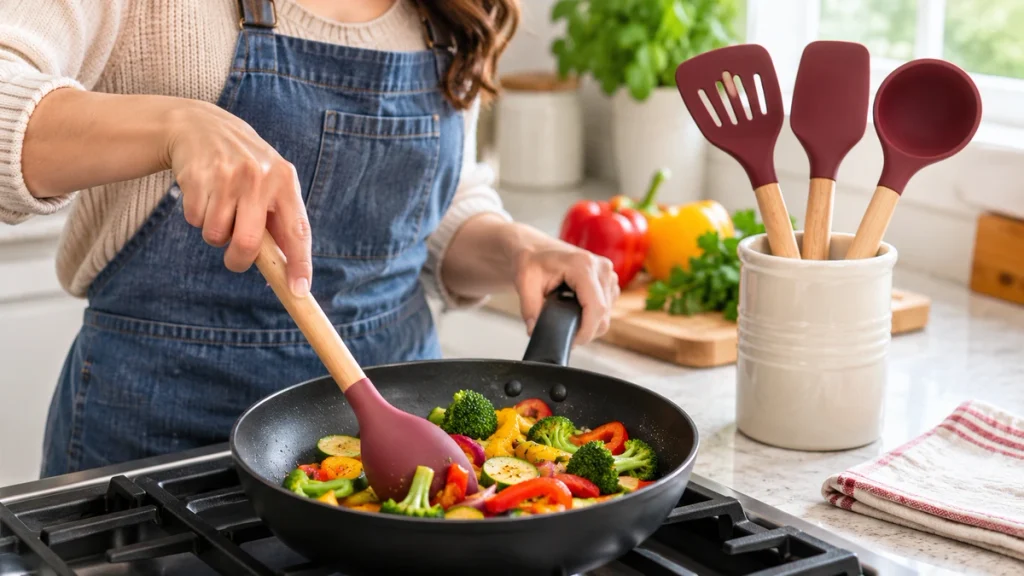
The goal is not the largest set; it is matching tools to real meals. A first-apartment kitchen may need only a turner, spoon, spatula and ladle. Frequent pasta cooks and bakers may use more.
Quick answer: Choose silicone kitchen utensils by the jobs they perform, the flexibility of the working end, compatibility with your cookware, handle comfort and the maker’s heat and cleaning instructions. If you select tools with wooden handles, plan to clean and dry those handles separately from the silicone tips.
Why the Right Cooking Utensils Matter
A good utensil does its job well. A turner slides under food, a spoon reaches the bottom of a pot, and a flexible spatula clears a mixing bowl. Cooking becomes less about finding gadgets and more about dinner.
Silicone is especially useful around nonstick cookware because its working surface is generally gentler than an exposed metal edge. For many nonstick pans, silicone, nylon and wood are practical alternatives to metal tools that may scratch the coating. Always follow the instructions for your particular cookware.
Start With the Meals You Cook Most Often
Think about a regular week. Do you scramble eggs, heat soup, toss pasta or make pancakes? Those meals point to the tools you will use most.
For Stirring and Serving
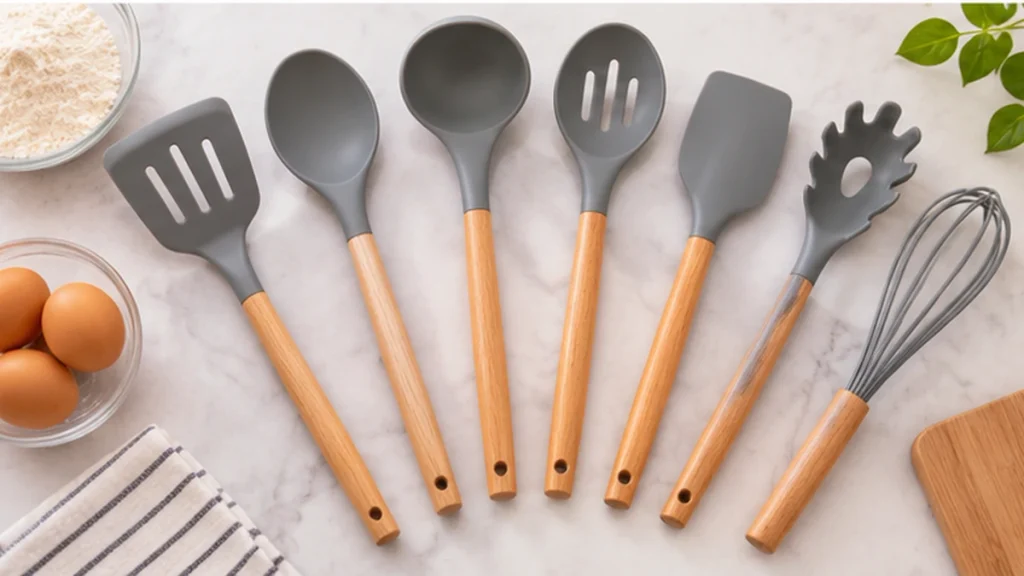
Choose a solid cooking spoon for sauces, rice, vegetables and other foods that need regular stirring. A ladle helps serve soup or chili with less mess. A slotted spoon lifts vegetables or dumplings while leaving liquid behind. For pasta, a pasta server can help grip and transfer noodles without needing an extra colander at the table.
For Turning and Lifting
A broad turner is handy for pancakes, eggs and delicate fish. Look for an edge thin enough to slide under food and a head firm enough to lift a serving. Slotted turners can allow excess oil or liquid to drain. A tool that is too flexible for a heavy burger may feel frustrating, even if it works beautifully for an omelet.
For Scraping, Mixing and Baking
A flexible spatula is useful for folding ingredients and scraping bowls. A rounded spatula can reach curved pan edges, while a basting brush can spread a light coating of oil or sauce. A whisk belongs in the mix if you regularly make dressings or batters, but check whether its working wires and connections suit your cookware.
Look Beyond the Word “Silicone”
Silicone tools vary in shape and firmness. A thin edge suits scraping but may struggle to lift a large portion. A sturdy spoon may be awkward in a narrow jar. Compare head dimensions and the handle connection.
Check whether the product is intended for food contact and whether it has a clearly stated temperature limit. “Heat resistant” alone is not enough information. A utensil suitable for stirring a simmering sauce should not automatically be left against a burner, hot pan rim or open flame. Follow the specific manufacturer’s directions rather than a generic internet temperature claim.
What to Know About Wooden Handles
Wooden handles offer a different grip and look, especially in a countertop crock. But wood needs its own care. A silicone tip does not mean the entire utensil is dishwasher-safe.
Wooden-handled utensils are best cleaned gently: wash by hand, towel-dry promptly, and let the handle air-dry fully. Prolonged soaking and dishwasher cycles can contribute to swelling, splitting or rough surfaces. Check the Kaluns care instructions for the exact model and treat any silicone-to-wood join carefully so food residue does not collect there.
A Real Example: The Kaluns 21-Piece Set
If you prefer assembling several basics at once, the Kaluns Silicone Kitchen Utensils Set, 21 Pieces on TurtlesEgg is a useful example to compare. It combines silicone working tips with wooden handles. Kaluns’ own 21-piece product description lists tools such as a soup ladle, solid and slotted spoons, solid and slotted turners, a pasta server, skimmer, basting brush, spatulas, whisk and measuring tools.
That range may be convenient for someone setting up a first apartment or replacing mismatched utensils. It does not mean every cook needs every item. Before ordering, compare the exact contents and material details on the current TurtlesEgg listing, then decide which pieces will earn space in your kitchen.
Check Heat Limits Before Cooking
Heat ratings are product-specific. Kaluns lists 350°F/180°C on its 21-piece manufacturer page, while some retailer descriptions differ. Follow instructions for your exact item and do not assume the handle and tip have identical limits.
For daily cooking, the simplest habit is to keep a utensil out of direct flame and avoid resting its working end on a very hot pan edge. If a tool becomes deformed, splits, develops a damaged tip or has a loose connection, stop using it for food preparation. No utensil material makes careless high-heat cooking safe.
Plan Storage Before Adding a Big Set
A set helps only if you can reach its pieces. A countertop holder keeps favorites nearby but takes space. Drawer dividers clear counters; suitable hanging loops can free drawers.
Try putting your five most-used items closest to where you cook and storing occasional tools elsewhere. Keep utensil heads clean and fully dry before enclosing them in a drawer or crock. Remember that a set containing measuring pieces may need a different storage spot from long-handled cooking tools.
How to Wash and Care for Silicone Kitchen Utensils
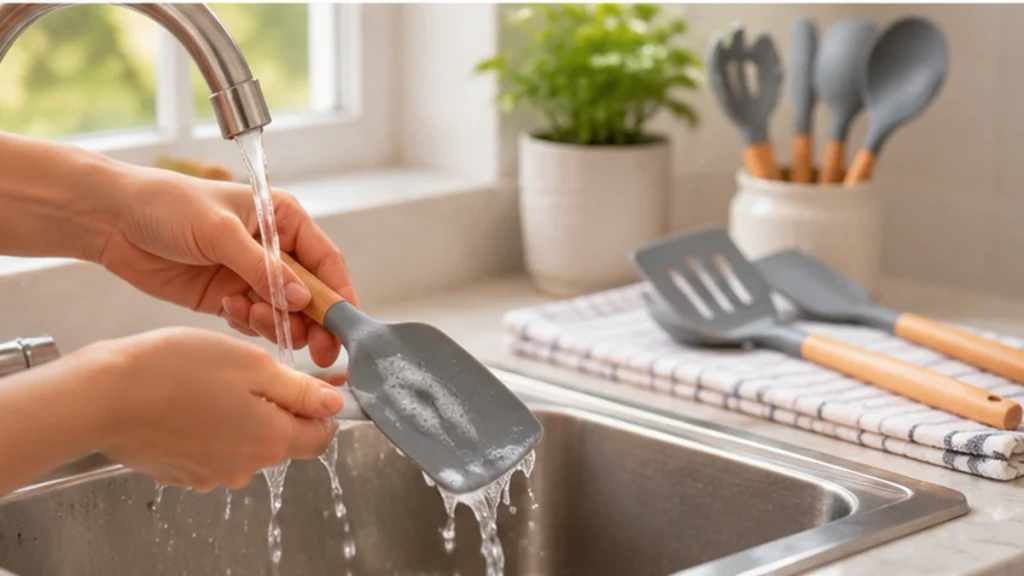
Follow the care label, especially for mixed materials. Wash silicone with warm water, dish soap and a soft sponge; clean seams and the tip-to-handle join. Avoid steel wool and sharp scrapers.
For wooden handles, limit soaking, rinse promptly, towel-dry, and allow the whole utensil to air-dry before storage. Never assume dishwasher permission applies to every piece in a mixed-material set. If the wood becomes deeply cracked or the silicone is torn or loose, replacing the damaged utensil is safer than continuing to use it.
Food safety matters as much as keeping the tools looking tidy. Wash utensils with hot, soapy water between tasks, especially after contact with raw meat, poultry, seafood or eggs. Keep those tools separate from equipment used for ready-to-eat foods until cleaned.
A Quick Kitchen Utensil Buying Checklist
- List the everyday meals you make before deciding how many tools to buy.
- Choose a spoon, turner, spatula and ladle that suit your pots and pans.
- Check tip shape, flexibility, grip and handle-to-head construction.
- Verify food-contact suitability, heat limits and the exact cleaning directions.
- Plan realistic storage, especially for larger sets and measuring tools.
- Check the live listing, seller details and included pieces before ordering.
When comparing photos and product descriptions, the TurtlesEgg article on Best Shopping Practices offers helpful reminders to read listing details carefully rather than choosing by appearance alone.
Frequently Asked Questions
Are silicone kitchen utensils good for nonstick pans?
They are often a sensible choice because flexible silicone working ends can be gentler than metal. For many nonstick pans, silicone and other nonmetal options help reduce scratching. Always follow your pan maker’s guidance and avoid forceful scraping.
Can silicone utensils be left in a hot pan?
Do not make that a habit. Heat tolerance varies by product, and a pan’s surface or edge can become hotter than expected. Set the utensil on a spoon rest and follow its stated temperature limit.
Can wooden-handled silicone utensils go in the dishwasher?
Do not assume so. Wooden handles may crack or swell under prolonged heat and water exposure. Hand-washing and prompt drying are prudent unless the specific manufacturer explicitly says otherwise.
Is a 21-piece utensil set necessary for a first apartment?
Not necessarily. A larger set can be convenient when it includes tools you will actually use. If space is tight, a few reliable basics may be a better starting point, with specialty tools added later.
When should I replace a cooking utensil?
Replace it when the working end tears, the handle becomes unstable, or deep cracks and hard-to-clean gaps appear. An attractive tool is not worth keeping if you cannot clean or use it safely.
Make Everyday Cooking Easier, One Tool at a Time
The most useful kitchen setup is built around your habits, not the number of pieces in a box. Start with tools that stir comfortably, lift food cleanly and respect your cookware. Then consider grip, storage and care requirements so they remain pleasant to use long after the first meal.
For a concrete comparison, explore the Kaluns 21-piece wood-and-silicone utensil set on TurtlesEgg. Whether you choose a full set or a smaller collection, matching tools to your routine is what makes them worthwhile.
Helping communities, one business at a time.