
A little citrus zest can make an ordinary dinner taste noticeably brighter, yet it is easy to take off too much peel or leave half the flavor on the cutting board. The trick is not buying the biggest grater in the drawer. It is learning where the flavorful outer skin ends, how to hold the fruit steadily, and when to stop. Once you know that technique, the same compact tool can finish pasta with cheese, add fragrant peel to baking, or bring a fresh accent to a family meal. Learning how to use a lemon zester is really about small, controlled movements and practical cleaning habits, not speed.
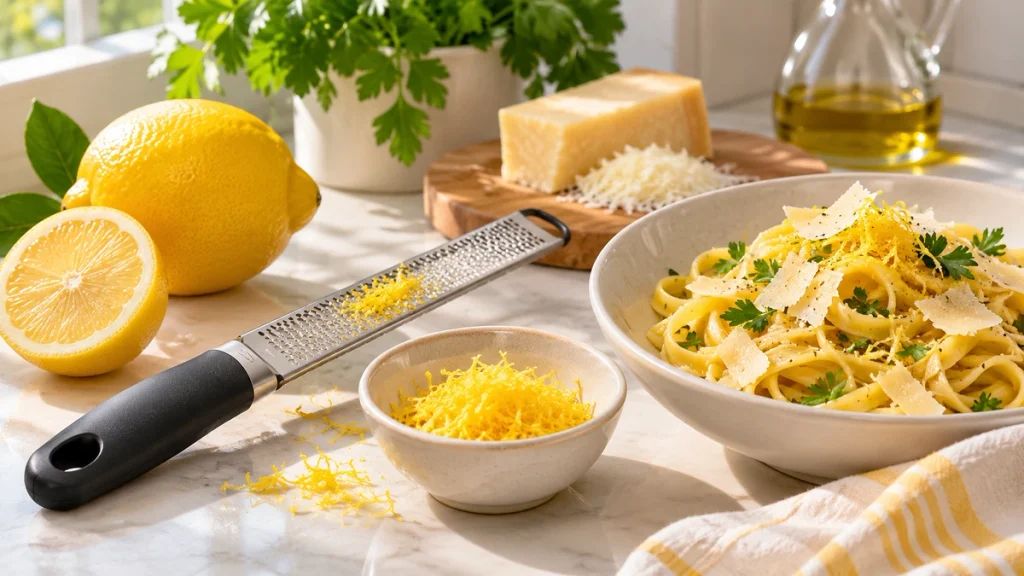
Quick answer: To use a lemon zester well, wash and dry the fruit, hold the grater securely over a bowl, and move only the colorful outer peel across the fine teeth. Rotate the lemon before reaching the white pith. Use light strokes for cheese and clean the tool promptly, following the manufacturer’s directions.
Start With the Colorful Peel, Not the White Pith
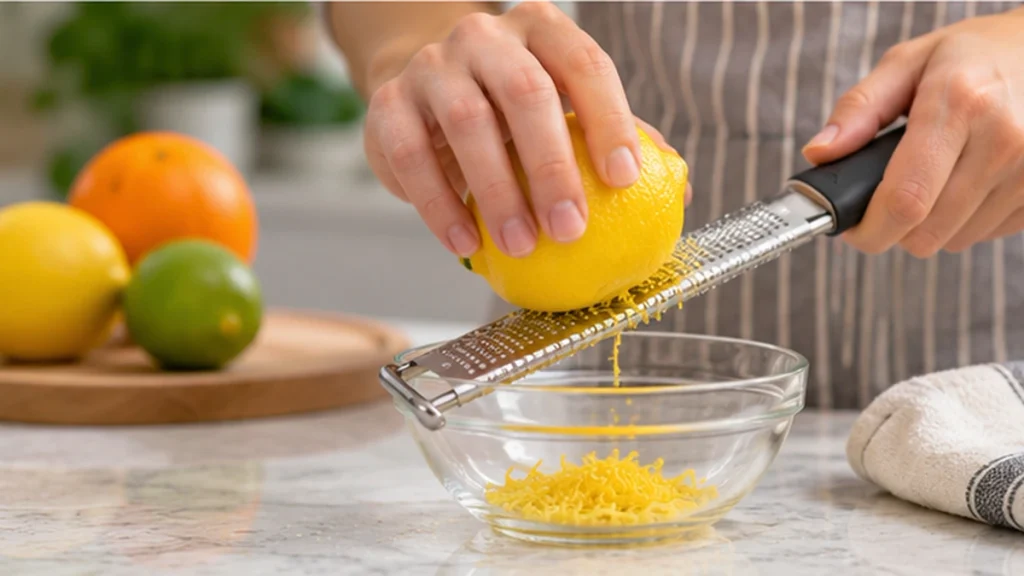
The bright yellow surface of a lemon contains aromatic oils that give zest its characteristic fragrance. The white layer underneath, called the pith, can taste more bitter. Rest the grater at a comfortable angle and pass the fruit across it with light pressure rather than digging into the peel. As soon as a patch looks pale, turn the lemon and work on a fresh area. For small recipes, a few gentle passes may be enough. Taste as you go instead of assuming that more zest always improves a dish. The same idea applies to limes and oranges, although peel thickness differs.
Wash, Dry, and Set Up a Stable Work Area
Before zesting, rinse the citrus under running water and dry it. A dry surface is easier to grip, and a bowl underneath keeps the fine pieces together. Place a non-slip mat or folded kitchen towel under the bowl if the counter is slippery. Decide whether you want the zest to fall straight into a dressing, a batter, or a small dish. Working above the food can save time, but a separate bowl makes it easier to control the quantity. Clear stray utensils from the work area so you are not balancing a sharp grater between crowded dishes.
Learn a Slow, Controlled Zesting Motion
Instead of sawing quickly, hold the grater by its handle and move the fruit steadily across the cutting surface. Keep fingertips away from the teeth and reduce the size of each stroke as the fruit gets smaller or harder to hold. Some cooks prefer moving the fruit while others move the tool; either can work if the grater remains stable and fingers stay clear. Do not push until the skin is bare. Stop, rotate, and check the color. If you are new to the tool, practice over an empty plate and look at the texture of the zest before adding it to dinner.
Use Fine Cheese Shavings Without Making a Mess
A fine grater can also make delicate Parmesan-style cheese shavings that disperse through warm pasta, vegetables, soup, or salad. Work with a manageable piece rather than a tiny end that forces your hand toward the teeth. Grate over the serving bowl when possible so the cheese does not clump on a board. Fine shavings melt or spread differently from chunky pieces, so begin with a small amount and add more to taste. Cheese can lodge between the teeth; do not scrape those openings with bare fingers. Use the cleaning tool or another method recommended by the maker.
Try Zest in Both Sweet and Savory Meals
Lemon zest is useful when a recipe needs brightness but not the extra liquid of juice. Stir a little into yogurt-based sauce, fold it into muffin batter, or sprinkle it on roasted vegetables just before serving. An orange peel accent can complement oatmeal or a simple glaze; lime zest can finish a bean salad or rice dish. For an easy dinner, add lemon zest to cooked pasta with olive oil, herbs, and grated cheese. The goal is balance. Too much finely grated peel can dominate delicate flavors, so measure a small amount at first and adjust after tasting.
Know What an Included Glove Can and Cannot Do
The featured Kaluns Lemon Zester and Parmesan Cheese Grater listing describes a cleaning brush and protective glove. Those accessories may be useful for handling the tool and tidying the teeth, but they do not make a sharp grater injury-proof. Check the supplied instructions for how the glove should be worn and what protection it is actually designed to provide. Keep the tool away from children, avoid distracted grating, and stop when a food item becomes too small to hold confidently. A little uneaten end piece is preferable to taking a risk with fingertips.
Clean the Teeth Before Residue Dries
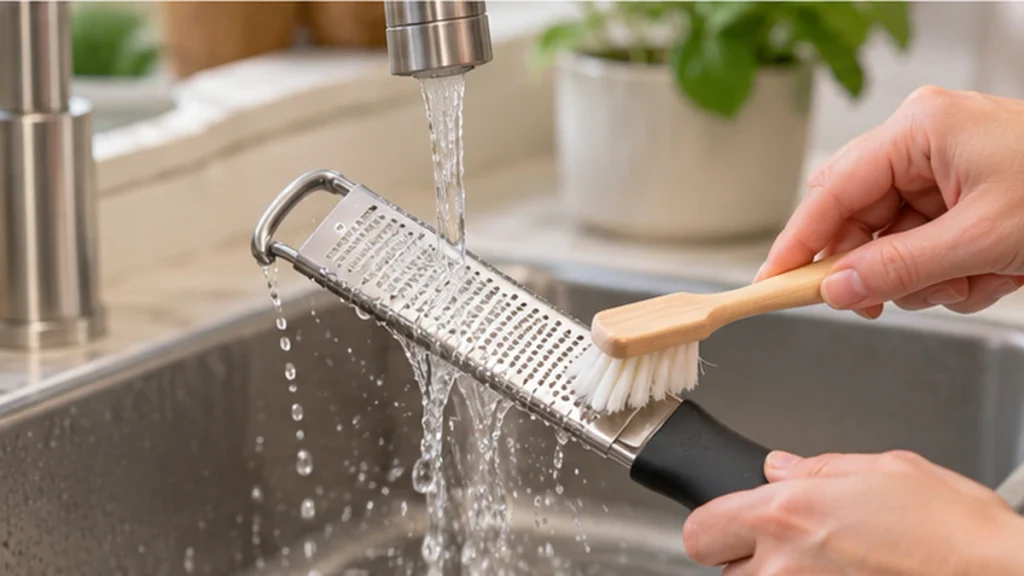
Fine zest and cheese particles can become stubborn once they dry in the grater. Rinse or soak only as the manufacturer recommends, use a suitable soft brush, and work carefully in a direction that avoids the cutting edges. Inspect the back of the grater too; food may collect there even when the front looks clear. Dry the tool thoroughly before storing it to reduce lingering moisture around its metal surface and handle. Do not assume dishwasher suitability without checking the exact product instructions. Taking a minute to clean immediately after use often saves a much longer scrubbing session later.
Choose the Right Grater for the Way You Cook
Look beyond product photographs. Check the handle shape, blade length, storage space, and whether the teeth are intended for fine zest, coarse shreds, or both. A narrow handheld tool is convenient when you only need a small finishing touch; a box grater may make more sense for large batches of vegetables. If you have limited drawer space, look for a safe cover or storage method. Read the product description closely, including accessories and care instructions. A useful zester should feel manageable and match the portions you usually prepare, not simply look impressive on a product page.
Make It Part of a Simple Dinner Routine
Try one practice meal rather than purchasing several specialty tools at once. Prepare pasta or roasted vegetables, zest a small part of a lemon into a separate bowl, and taste the finished dish after adding a pinch. Next time, test the grater with a firm cheese or a different citrus fruit. Write down which amount you liked and whether cleaning was easy. When friends or relatives help cook, give each person a clear workstation rather than crowding the sharp tool. Small, repeatable habits turn a zester from an occasional gadget into a genuinely useful kitchen essential.
An Everyday Example
Imagine a Sunday meal with roasted vegetables and a simple pasta bowl. Before cooking, you wash a lemon, set out the zester and place a small bowl underneath. A few gentle strokes give you fragrant peel for the vegetables; later, the same tool creates a light dusting of Parmesan over the pasta. You stop when the lemon skin turns pale, keep fingertips away from the teeth, and clean the tool before cheese dries on it. Nothing about that routine requires special culinary knowledge. The useful lesson is that one well-chosen tool can handle a couple of small jobs when it is used slowly and cleaned properly.
One More Detail Worth Checking
One final detail is timing. Zest added near the end of cooking can smell different from zest that has simmered for a long period. Neither approach is always right, so follow the recipe first and experiment only with a small batch. When using cheese, grate just before serving if you prefer a fresh, fine texture. Keep an eye on the amount rather than adding several spoonfuls because the tool makes it easy. Practical technique is measured by the final taste, not how quickly you can fill a bowl.
A Quick Buying Checklist
- Start with your actual needs, available space and the product dimensions or capacity shown in the listing.
- Confirm the number of items included rather than relying only on styled photographs.
- Read the specific care, use and safety instructions before planning how to use the product.
- Compare the current seller description and terms, and avoid assumptions about unlisted features.
- Check the live TurtlesEgg product listing and available inventory before making a purchase.
For a broader reminder about comparing product listings and seller details, read Best Shopping Practices before ordering.
Frequently Asked Questions
Can I zest a lemon before cutting it?
Yes. Zesting the whole fruit is usually easier to control than gripping a cut half. Wash and dry the peel first, then rotate the lemon as you work.
Is lemon zest the same as lemon juice?
No. Zest comes from the colorful outer peel and contributes fragrant oils. Juice adds liquid and acidity; recipes sometimes call for both.
Can I use a lemon zester for Parmesan?
Many fine graters can make small cheese shavings, but check the tool’s intended uses and keep fingers clear as the cheese gets smaller.
Should I remove all of the lemon peel?
No. Stop when the colorful surface has been removed from one area. Grating into white pith can add unwanted bitterness.
A Practical Choice for Everyday Life
A zester earns its place through control, versatility, and easy cleanup. Start with the outer peel, rotate the fruit early, and treat the teeth with respect. When comparing options, look at the exact Kaluns grater listing on TurtlesEgg and review the included accessories and instructions. For a broader reminder to check descriptions and seller details before ordering, see Best Shopping Practices. A bright finishing touch is often only a few careful strokes away.
Helping communities, one business at a time.