
A pantry can look full and still be missing the two things needed for breakfast when relatives arrive. Boxes hide behind taller containers, half-used packages accumulate, and shopping happens from memory. A pantry essentials checklist works best when it starts at home instead of inside an online cart. With holiday guests around, take a few minutes to see which staples are genuinely usable, which meals you plan to prepare and which quantities make sense. Gulf Coast Market Direct on TurtlesEgg can be considered for available local-delivery items, but the preparation itself remains useful even when an address or product does not qualify.
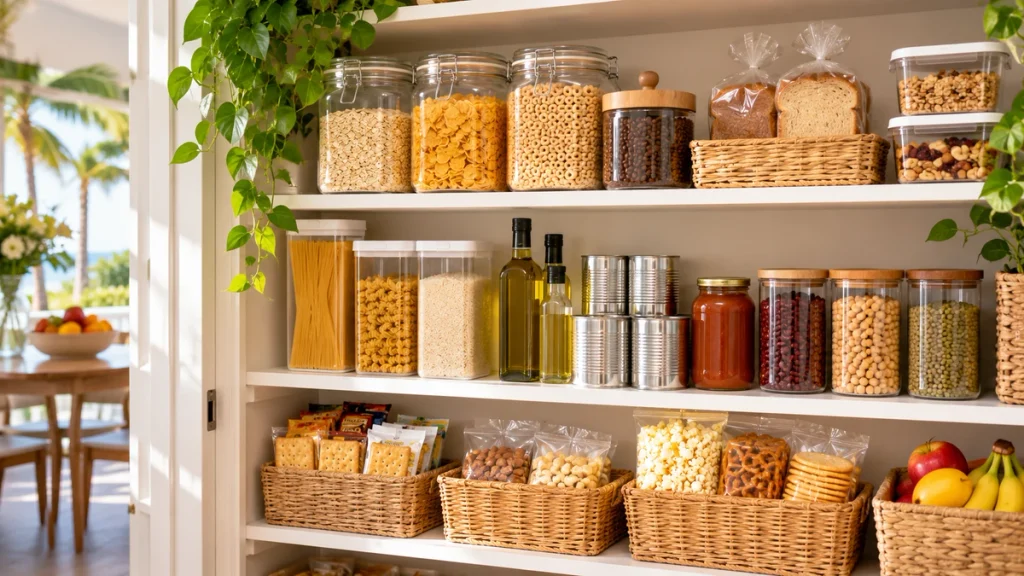
Quick answer: Divide the pantry into small zones, plan a handful of real meals, check quantities and storage dates, then make a short list of gaps. Browse Gulf Coast Market Direct only after confirming eligible local-delivery options for your address.
Build a Pantry Essentials Checklist from Real Meals
Write down the breakfasts, lunches and dinners you realistically expect to make while guests are in the house. A casual breakfast may need fewer ingredients than a large cooked brunch. Think about who will eat at home, who plans to dine out and whether any guest has already offered to bring something. Translate each meal into a short ingredient list, then compare that list with your shelves. This is more focused than buying several unfamiliar pantry staples because they look festive. The objective is to support an actual plan while leaving room for last-minute changes.
Divide the Pantry into Small, Visible Zones
Make separate spaces for breakfast staples, cooking basics, snacks and unopened backups. You do not need matching containers or expensive labels. Even moving similar boxes onto one shelf can reveal the duplicate bags of rice or crackers that were easy to overlook. Put open packages where they can be seen and follow their labels for storage instructions. If an item has been stored incorrectly, do not rely on appearance alone to declare it safe. Organization should make everyday choices easier, not turn the pantry into a decoration that nobody feels free to use.
Check Dates, Conditions and Realistic Quantities
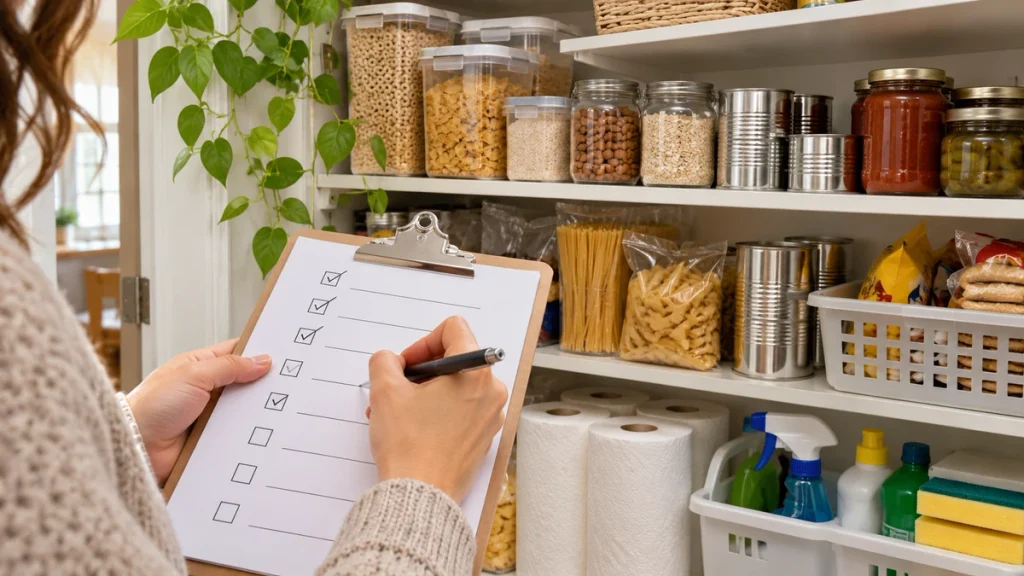
Look at package dates, seals and storage directions before putting older goods onto a guest menu. A date label does not always mean the same thing as a safety deadline, and different foods have different storage guidance. When uncertain, consult reliable food-safety information instead of guessing. Count how many servings remain in an open package rather than counting the package as full. Two nearly empty jars may not cover a family breakfast. Equally, buying another large container of something you seldom use may create unnecessary clutter after everyone leaves.
Give Snacks and Drinks a Reasonable Limit
Guests appreciate choices, but the kitchen does not need to resemble a convenience store. Choose a few flexible snack types and a drink plan that reflects the people actually visiting. For example, one plain snack plus one sweet option can be more practical than several nearly identical flavors. Remember water and any dietary preferences confirmed directly with guests. Before ordering, check sizes and item descriptions carefully. If the seller does not show a preferred brand or pack, make a conscious substitution decision rather than assuming that the online photograph guarantees an exact match.
Leave Space for the Food That Will Arrive Later
Do not fill every shelf or refrigerator compartment before a family gathering. Guests may bring dishes, and holiday cooking can create leftovers. Check that your refrigerator is operating properly and plan prompt storage for perishables; FoodSafety.gov provides guidance for safe storage times. Avoid combining a pantry reorganization with a complicated new labeling system on the day everyone arrives. The final step is simple: write down only the gaps. That short list can guide an ordinary shopping trip or an eligible local-delivery order if the current seller catalog and timing fit your needs.
Use a Small ‘First to Use’ Shelf
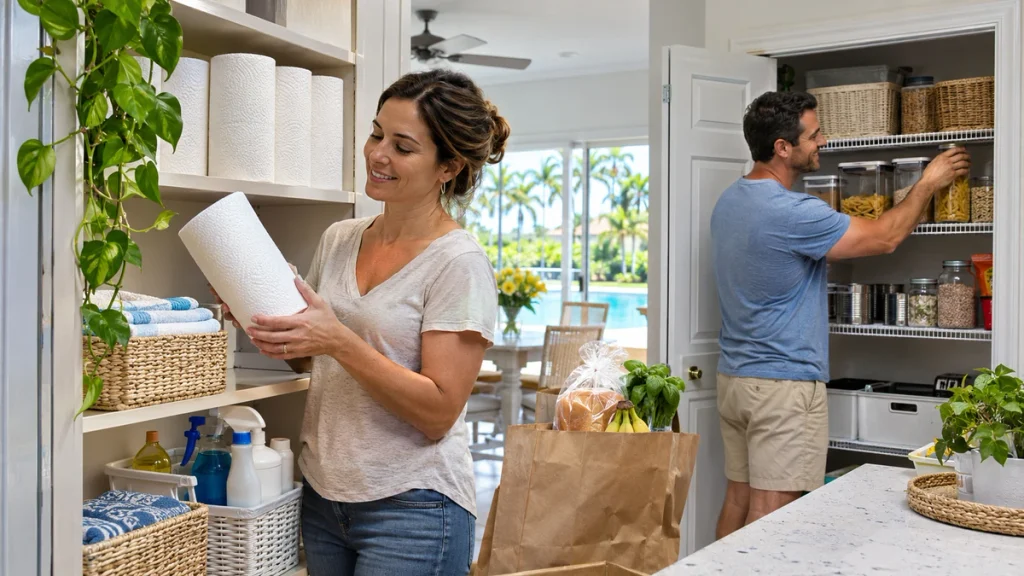
A visible area for opened packages or suitable ingredients nearing the end of their recommended storage period can help meal planning. Do not use it to justify eating spoiled or improperly stored food. Put labels where you can still read package directions and keep raw and ready-to-eat foods separated appropriately. For household food storage questions, FoodSafety.gov’s FoodKeeper information is a helpful reference. When the pantry is organized around what should be used first, the next list can focus on real gaps instead of items that were hiding in the back of the cupboard.
A Realistic Southwest Florida Example
Imagine a family in Bonita Springs expecting three relatives for two nights. Before making an order, they list two breakfasts, one shared lunch and snacks for an afternoon visit. A cupboard check reveals enough coffee and oats, but no unopened crackers and only a little cooking oil. They move older packages forward, compare the remaining quantities with their menu and write a short shopping list. When they browse Gulf Coast Market Direct, they check whether suitable options are listed and whether their delivery address is eligible. The plan remains flexible because the family has not counted on unconfirmed stock or delivery promises.
Turn the Short List Into a Real Choice
Before opening a shopping page, separate immediate needs from conveniences that could wait. Check your cupboards once more and look at how much space you have for any new pack. Keep a preferred size or important product detail beside each item. If a request seems unclear, ask the household member who uses it rather than choosing a substitute silently. This extra minute can make an online order easier to review and can also reveal that no purchase is needed at all. Local delivery is most helpful when it fits a deliberate plan rather than encouraging you to add products simply because they appear on a screen.
How to Check TurtlesEgg Local Delivery Options
TurtlesEgg’s local-delivery page provides a way to enter an address or ZIP code and discover participating sellers. For the featured option, open Gulf Coast Market Direct and check the live listings rather than relying on a remembered product name. A city such as Naples, Estero or Fort Myers does not by itself guarantee an eligible delivery address. What appears in a seller’s catalog, including pack size and available choices, may differ from a general example in an article. If the item you planned for cannot be found, revise the plan deliberately instead of assuming that it will be supplied later.
Review Delivery Details Before You Commit
Read any delivery choices and seller terms visible during the actual ordering process, including timing, charges and product conditions. Do not assume free delivery, no membership requirement, automatic substitutions, a same-day arrival or any particular holiday schedule. None of those promises is established by this guide. The Federal Trade Commission recommends checking seller terms and how marketplace purchases are handled before buying. Keep a copy of relevant order details if you proceed. If the timing does not work for your household, use a different plan instead of expecting a delivery driver to overcome traffic or holiday constraints.
Check and Put Away Essentials When They Arrive
If you place an eligible order, compare what arrives with the products and quantities confirmed for the purchase. Check packaging condition and follow the instructions on each item. Place cleaning products in appropriate secured storage and keep household supplies where regular users can find them. For any perishable foods, follow relevant food-safety guidance and store them promptly. If something appears incorrect, consult the seller or marketplace’s actual support and return terms rather than assuming a specific resolution. A useful shopping process continues after the order arrives, when items become part of the household’s normal routine.
An Extra Step That Helps
For families concerned about waste, keep a ‘use first’ area for items appropriate to eat soon and follow safe-storage guidance. FoodSafety.gov’s FoodKeeper resource can help with questions about how long different foods keep in a pantry, refrigerator or freezer. A local delivery order does not replace that judgment. Receiving an item and storing it correctly are separate parts of caring for the household.
Quick Household Checklist
- Check the actual household need before adding an item to a list.
- Record a clear product description, unit count and preferred pack size.
- Confirm your delivery address qualifies for the seller before making plans.
- Review available delivery timing, terms and any charges on the live site.
- After a purchase, check delivered items and follow all storage instructions.
For more shopping comparisons and general marketplace tips, see Best Shopping Practices on the TurtlesEgg blog.
Frequently Asked Questions
Should I refill every pantry container before guests visit?
No. Check actual menus, package condition and current amounts first. Restock only what the planned meals and normal household routine call for.
Can I assume Gulf Coast Market Direct carries every pantry staple?
No. The catalog may change. Browse the live seller page and check each product before treating it as part of your plan.
What about refrigerated foods?
Plan cold storage separately, check temperatures where appropriate and follow authoritative food-safety guidance after delivery.
How early should I make a list?
A day or two before shopping can help, but timing depends on your plans and current availability. Verify any delivery window before relying on it.
A Practical Plan for the Days Ahead
A pantry reset does not have to be a large project. A few real meal plans, organized shelf zones and an honest count of what is already at home can make a holiday visit feel easier. When your gap list is ready, explore the Gulf Coast Market Direct seller page on TurtlesEgg as a potential local-delivery option. Check your specific address, current products and available timing. Useful shopping starts with a clear household plan, not with filling a cart.
Helping communities, one business at a time.