

Most founders do not have an AI tools for entrepreneurs problem. They have a workflow problem.
The real risk is not missing the latest tool. It is building a stack of disconnected apps that creates more cleanup, more switching, and more founder drag than the manual process it was supposed to fix. For a practical internal companion, see our guide to the AI SEO checker if search workflow is one of the bottlenecks you are evaluating.
Unlike typical lists of “best AI tools,” this guide focuses on how tools function inside real workflows rather than ranking them by features alone.
Most AI content focuses on features and tool comparisons. In practice, the difference between success and failure is rarely the tool itself. It is how well that tool fits into a real workflow.
By TurtlesEgg Editorial Team
Reviewed for editorial clarity and search accuracy by the TurtlesEgg Search & Content Review Team
This article is for general informational purposes only and is not legal, technical, financial, or compliance advice. Tool fit depends on your workflow, privacy needs, team size, and operating constraints.
What are the best AI tools for entrepreneurs?
The best AI tools for entrepreneurs are the ones that remove a single recurring bottleneck inside a connected workflow. Instead of using many disconnected apps, most founders get better results from a simple system made up of one creation tool, one automation layer, and one source-of-truth system.
This guide is based on real-world workflow design patterns observed across small businesses, marketplaces, and content systems where AI adoption either reduced or increased operational friction.
Quick answer: AI tools for entrepreneurs
In practice, AI tools create value only when they are part of a connected workflow designed to remove a recurring bottleneck.
A small, interoperable system usually beats a pile of subscriptions.
In most cases, the strongest starting point is what we call the 3-Layer AI Workflow Stack: one creation tool, one automation layer, and one source-of-truth system.
No-code tools usually come first. Agentic AI belongs later, after the workflow is stable and review checkpoints are clear. Founders who want a live marketplace example of a seller workflow can also review Sell on TurtlesEgg.
AI tools for entrepreneurs are software systems that help automate, generate, or optimize business tasks such as content creation, customer communication, analysis, and operations, when integrated into a structured workflow.
What AI tools for entrepreneurs really means
In this article, AI tools for entrepreneurs means software that improves execution in writing, customer support, analysis, research, operations, or automation. It does not mean casual entertainment apps, novelty chat tools, or heavy custom machine-learning infrastructure that only makes sense for larger engineering teams.
That distinction matters because most founders do not need more software. They need less friction. A tool only creates leverage when it fits inside an existing process without multiplying retraining, handoffs, and scattered data. When adoption is careless, AI does not reduce workload. It redistributes it into hidden cleanup work.
The real cost of most AI tools is not the subscription. It is the invisible time spent fixing what they break between systems.
This is why a tools-first mindset usually disappoints. The better approach is systems-first: identify the one workflow that keeps stealing time, then build around it with a small, connected stack. This is why many AI tools for small business fail to deliver value when implemented without a clear workflow. The same applies to AI tools for startups, where speed matters but structure matters more. For search and content teams, a workflow-specific tool such as WaveAI SEO is a better example of fit-based adoption than adding another generic subscription.
Methodology for choosing AI tools for entrepreneurs
This article evaluates AI tools through a workflow-fit lens, not a trend lens. The core test is simple: does the tool reduce friction inside a real business process, or does it create more cleanup than it saves?
The framework used throughout this article is five-part: bottleneck clarity, integration quality, privacy risk, review control, and operational durability. That means the goal is not to find the flashiest software. The goal is to identify the smallest useful system that can repeatedly solve a real problem.
Recent industry reports indicate that over 60% of small businesses experimenting with AI report limited ROI, with poor integration and workflow fragmentation cited as a primary reason rather than tool capability. This reinforces the importance of a systems-first approach instead of a tools-first mindset.
The examples below are practical business scenarios, not vendor endorsements or universal rankings. The purpose is to help entrepreneurs make better stack decisions with less noise. The National Institute of Standards and Technology emphasizes governance, risk awareness, and human oversight in AI adoption, which aligns closely with the workflow-first approach used here. See NIST AI Risk Management Framework.
| Approach | What it looks like | Outcome |
|---|---|---|
| Tools-first approach | Multiple disconnected AI subscriptions | More switching, cleanup, and hidden workload |
| Workflow-first approach | Small connected system built around one bottleneck | Faster execution, less friction, better scalability |
Key takeaways for AI tools for entrepreneurs
- More tools rarely means more leverage: disconnected apps usually create more founder drag than value.
- Start with one bottleneck: choose the process that repeatedly wastes the most time.
- Use the 3-Layer AI Workflow Stack: one creation tool, one automation layer, and one source of truth.
- No-code usually comes first: it is the fastest way to validate workflow fit.
- Agentic AI comes later: only after the manual workflow is stable and review points are clear.
- Privacy and export options matter: a clever tool becomes expensive when it traps data or weakens oversight.
The reality check on AI tools for entrepreneurs in local business
Many AI listicles are written as if every company has spare budget, technical staff, and clean internal systems. Local businesses usually have none of those luxuries. For a bakery, salon, boutique, agency, clinic, or service business, AI has to be immediately useful, low-friction, and safe enough to operate inside daily work.
That usually makes the best early use cases surprisingly narrow. Message triage. Review-response drafting. Appointment reminders. Product description updates. FAQ handling. Follow-up prompts for repeat customers. These are not glamorous use cases, but they are the ones that remove real friction fastest.
The moment an AI system touches customer contact details, invoices, bookings, or internal documents, the standard changes. Privacy settings, access control, export options, and human approval stop being nice extras and become mandatory. Drafting is one thing. Sending or posting autonomously is another. The FTC has also warned businesses to be careful about deceptive or unsupported AI claims, which is another reason disciplined review matters. See FTC guidance on AI claims.
A local business does not need to automate everything. It needs to automate what can be reviewed safely and what saves enough time to matter.
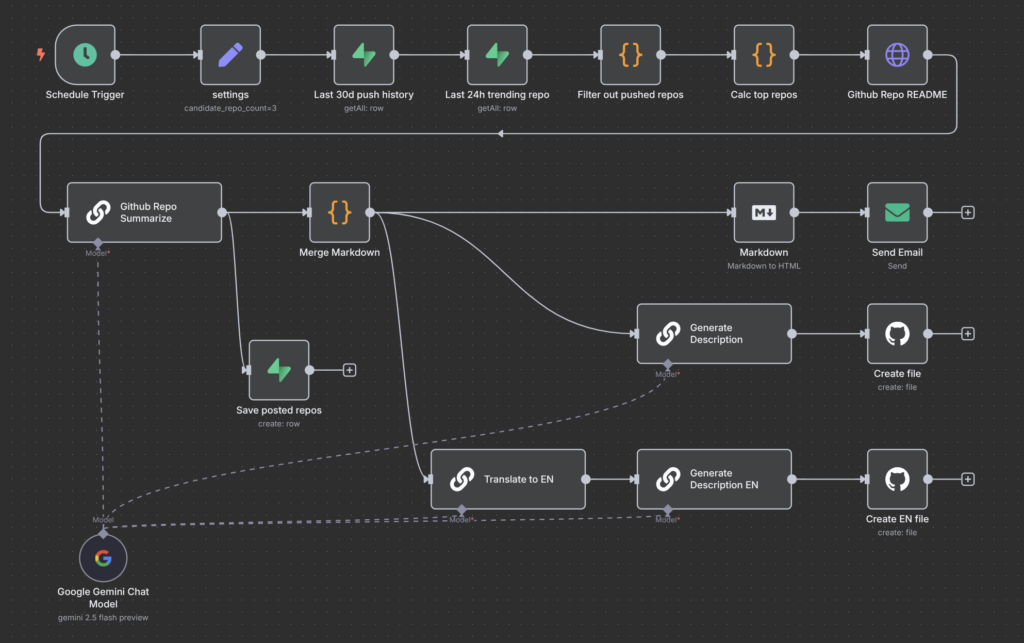
Example of a simplified workflow where AI supports drafting and automation, while a core system maintains data integrity.
What AI tools for entrepreneurs are good at, and what they are not
Traditional software records and routes work. AI helps generate, summarize, classify, and recommend. That is the real divide.
A booking system records appointments. A CRM records customer data. A spreadsheet records inventory. Those systems should remain the system of record because they are deterministic. They store truth. AI should sit above them where synthesis or drafting is useful.
That means AI is strongest when the job is cognitive but repetitive: summarizing notes, drafting replies, sorting messages, generating copy variations, extracting patterns, or preparing first-pass research. It is weakest when the job demands exactness with no tolerance for ambiguity and no review layer.
The tradeoff is simple. AI buys speed. Human review preserves reliability.
Build a small AI business stack, not a pile of apps
The most durable founder setup is usually the 3-Layer AI Workflow Stack.
- Creation tool: used for drafting, summarizing, rewriting, or generating assets.
- Automation layer: used to route information, trigger steps, and reduce manual handoffs.
- Source of truth: used to store records, customer data, inventory, tasks, or operational state.
This is how entrepreneurs avoid subscription clutter. One tool creates. One layer moves. One system stores. When those roles are clear, the stack stays understandable and easier to maintain.
When those roles are blurred, founders end up copying text between apps, rechecking the same data in multiple places, and fixing errors caused by disconnected logic. That is not automation. That is disguised administrative work.
Examples of AI tools for entrepreneurs by workflow
The framework becomes clearer when applied to real tools. The goal is not to recommend specific vendors, but to show how different categories fit inside a workflow.
- Creation layer: tools such as ChatGPT or Claude for drafting, summarizing, and generating first-pass outputs.
- Automation layer: tools such as Zapier or Make to route data, trigger actions, and connect systems.
- Source of truth: systems such as Notion, Airtable, or a CRM to store records and maintain operational state.
The exact tools matter less than the structure. A small, connected system consistently outperforms a large stack of disconnected apps.
| Layer | Function | Example Output |
|---|---|---|
| Creation | Drafting, summarizing, generating | Email replies, product descriptions |
| Automation | Routing, triggering, connecting systems | Auto-send drafts for review |
| Source of Truth | Storing records and operational data | CRM entries, order data |
Where no-code fits, and where agentic AI does not
No-code tools are usually the right first move because they let a founder validate the workflow without building infrastructure first. That matters. If the workflow is still changing weekly, autonomy is premature.
Agentic AI should be introduced only after the business can answer three questions clearly:
- What exact task is being delegated?
- Where does the agent get its data?
- Where is the human review checkpoint?
If those answers are vague, the automation is not ready. Automating an unstable process does not create leverage. It compounds mistakes faster.
Best practice: start with one bottleneck
Do not start with a tool list. Start with the workflow that repeatedly wastes founder time.
Example: A local service business handling customer inquiries manually each day can use AI to draft replies, an automation tool to categorize messages by urgency, and a CRM to store interactions. This reduces response time while keeping human review in place, creating a simple but effective workflow.
That bottleneck is usually easy to spot. It is the task you complain about every week. It may be customer-message overflow, proposal drafting, lead follow-up, intake triage, appointment reminders, product copy updates, or scattered internal notes.
Once the bottleneck is clear, build the smallest system that resolves it. For example:
- Customer inquiry overload: AI drafts replies based on previous responses, automation routes messages by urgency, and the CRM stores the full interaction history. This reduces response time while maintaining consistency, context, and human oversight.
- Content bottleneck: AI generates drafts, automation sends for review, project system stores approved assets.
- Lead follow-up gaps: AI drafts follow-up messages, automation schedules reminders, CRM tracks status.
The point is not to deploy AI everywhere. It is to remove drag from the one place where time is leaking most consistently. If organic traffic and content production are part of that bottleneck, teams may also want to compare process options against our internal AI SEO checker.
How to screen AI tools for entrepreneurs before you pay for them
Entrepreneurs waste money on AI tools for predictable reasons. The software looks smart in the demo, but real evaluation never happens. A stronger pre-purchase screen is straightforward:
- Define the task: what exact step will this tool replace, reduce, or speed up?
- Check integration reality: can it connect to the system that stores your actual business data?
- Check approval flow: can a human review the output before it reaches a customer?
- Check export and portability: can you retrieve your data if you leave?
- Check privacy controls: who can see, send, edit, or approve what?
If a tool fails those basics, it is not strategically useful no matter how impressive the interface looks. CISA’s general guidance on securing digital systems is also a useful reminder that access control and operational hygiene matter long before a tool becomes business-critical. See CISA cybersecurity guidance for small business.
Founders who want to see how a more connected seller workflow is presented in practice can also review Sell on TurtlesEgg and compare that with a more focused workflow tool such as WaveAI SEO.
If workflow clarity is still evolving, reviewing structured approaches such as our AI SEO tool comparison can help identify where tools fit within a larger system.
Frequently asked questions
The best AI tools are the ones that remove one recurring bottleneck inside a connected workflow. In most cases, that means one creation tool, one automation layer, and one source-of-truth system rather than a pile of disconnected subscriptions.
Should a local business let AI handle customer messages automatically?AI can draft and classify customer messages, but local businesses should usually keep a human review step before anything is sent. Privacy settings, access controls, and approval logic matter more than automation speed.
Should I replace my current software with AI?Usually no. Traditional software should remain the system of record for bookings, customer data, or operations. AI works best as a layer for drafting, summarizing, triaging, and recommending inside that existing workflow.
When should entrepreneurs use agentic AI?Agentic AI belongs later, after the manual workflow is stable and review checkpoints are defined. If the workflow is still changing or the data is messy, autonomy usually creates more mistakes than leverage.
How do I know if an AI tool is a bad fit?It is usually a bad fit if it creates retraining overhead, fragments data, lacks export options, or requires manual cleanup across disconnected systems. The right tool should reduce friction, not move it around.
Limitations and scope
This article is a strategic guide, not a tool-by-tool technical manual. It does not attempt to rank every AI platform on the market or provide implementation instructions for every business type.
AI adoption quality depends on the process underneath it. Clean data, clear approvals, realistic expectations, and team adoption all affect results. A strong tool can underperform inside a weak workflow, and a modest tool can create real leverage inside a disciplined one.
Bottom line: AI tools for entrepreneurs
AI tools for entrepreneurs create leverage only when they reduce friction inside a real workflow. The highest-return move is usually not buying more software. It is identifying one recurring bottleneck, wrapping it in a small connected stack, and keeping a human in the loop where judgment, privacy, or trust still matter.
For most founders, the winning sequence is simple: find the drag, stabilize the process, connect the tools, and add autonomy only after the workflow can be trusted. That is how AI becomes operational leverage instead of operational noise. The difference is not the tool. It is the system behind it.