
Small kraft paper bags can make snacks, treats and gifts easier to pack and carry. However, the wrong size can leave cookies crushed, candy packs hidden or gifts looking lost inside their packaging. Choosing the right size helps your team pack orders faster and gives customers a neat, thoughtful package.
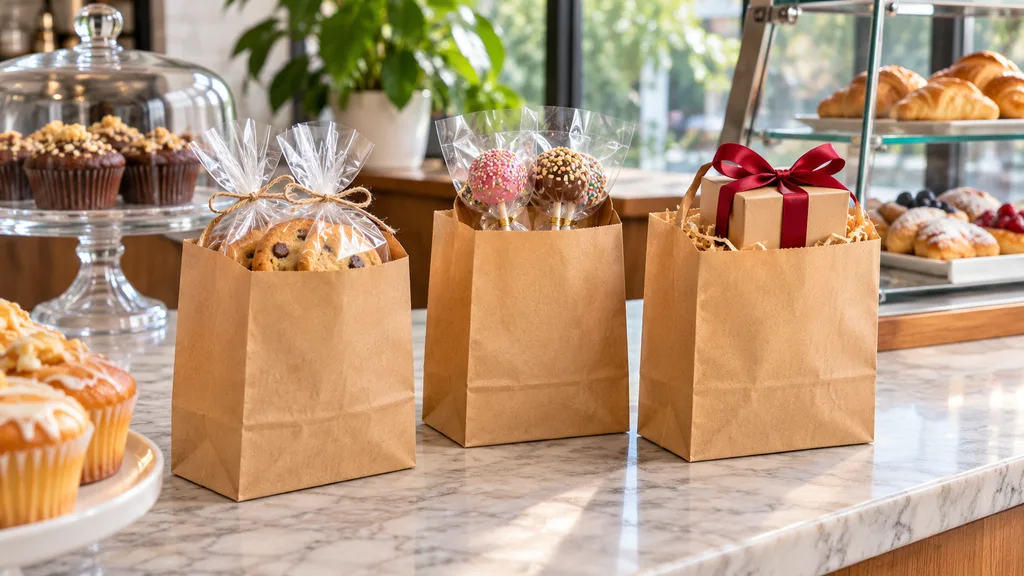
Small kraft paper bags can solve these everyday packing problems when you choose them around the actual item. For U.S. cafés, bakeries, small retailers, caterers and event hosts, the most useful questions are practical: Will the contents fit? Can the bag stand while it is filled? Is the material suitable for what goes inside? And how many bags should you keep in stock?
Quick answer: Measure the item first, including any wrapper or box. Compare its width and depth with the bag’s base, then check height, food-contact suitability, handling strength and pack quantity. Test a sample with your real products before committing to a case. A small kraft bag works best when it is comfortably filled rather than forced shut or left almost empty.
Why Small Kraft Paper Bags Matter
Packaging is part of the handoff. Staff need to load items quickly, and customers need to carry them without juggling loose treats. A bag with a flat base can stay open at the counter, while side folds create space for items that are not completely flat. That helps with individually wrapped cookies, packaged candies, favors, small purchases and some light bakery items.
Step 1: Start With the Contents, Not the Bag Name
Make a short list of what you pack most often. A single wrapped brownie has different needs from three small cookie sleeves, a jar of sweets or a boxed party favor. Measure the widest and deepest part of each product, including ribbons, labels or protective wrapping. Then add a little room so the product can slide in without crushing the edges.
The words ‘mini’ and ‘small’ are useful starting points, not reliable measurements. A narrow bag may be tall enough for a treat but too shallow for its box. If you routinely pack lunches, multiple containers or larger bakery orders, a roomier option such as the EcoQuality 10 lb brown kraft bag may be more sensible than stretching a tiny bag beyond its intended use.
Step 2: Check Small Kraft Paper Bag Dimensions
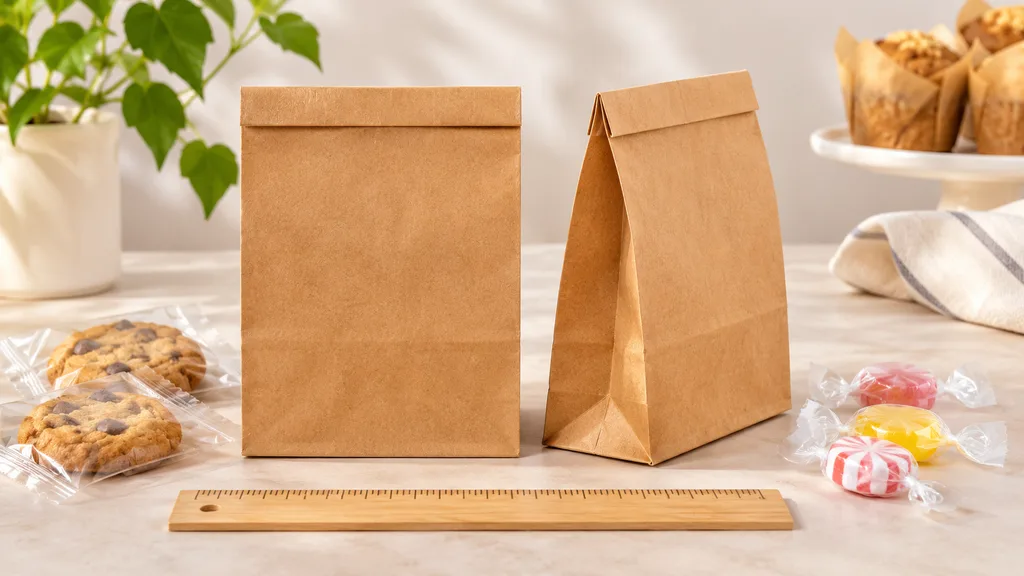
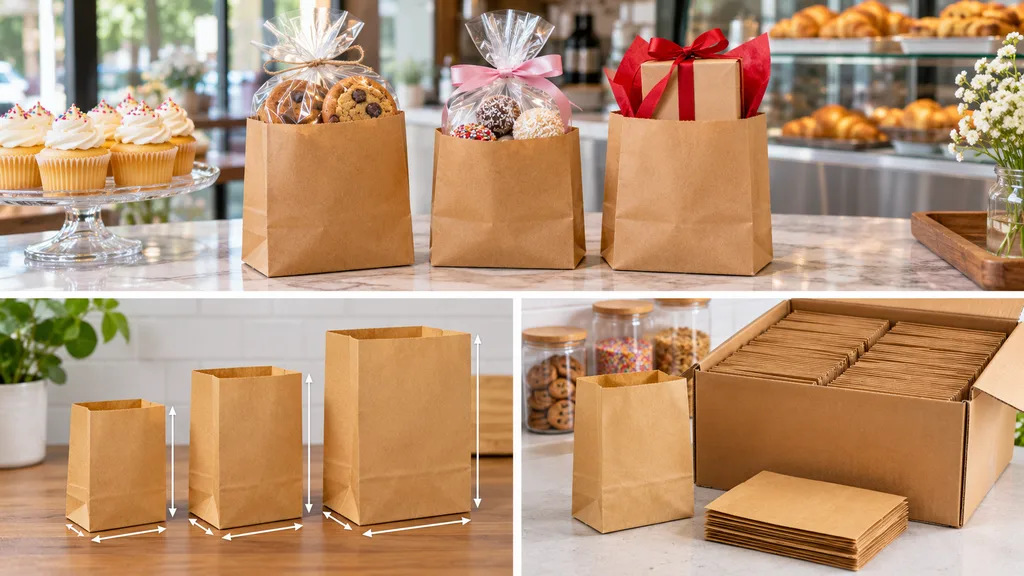
Paper bag dimensions commonly describe width, gusset (the expandable side depth) and height. Always confirm the seller’s measurement order. Side gussets open as the bag fills, while a flat bottom helps the bag stand for loading. Neither feature guarantees that any product will fit: a bulky box still needs the correct base dimensions.
The EcoQuality mini brown kraft paper bags on TurtlesEgg offer a useful real-world example. The listing specifies a 3½ × 2⅜ × 6⅞-inch bag, expandable side gussets, a flat base and a 1,500-piece quantity. It identifies the style as ‘1 lb,’ which is a nominal bag-size description; do not assume every combination of products is safe to carry at that weight without testing.
Step 3: Match Paper and Food-Contact Suitability
Not every paper bag handles every food in the same way. Dry, wrapped cookies and packaged candy are straightforward uses. An oily pastry, moist sandwich or hot item may need an appropriate food-safe liner or a different package. The important question is not whether the bag looks like bakery packaging; it is whether the specific product is suitable for the intended contact, temperature and use.
The mini-bag seller describes its product as made from 100% recycled kraft paper and food safe. Those are listing details, not a blanket promise about grease resistance, hot filling or holding uncovered wet food. The U.S. Food and Drug Administration’s food-packaging guidance explains why intended food-contact uses matter. Ask the seller for more detail whenever the use is not clear.
Step 4: Choose Small Kraft Paper Bags for Each Use
Bakery Snacks and Café Counter Orders
A small paper bag can make handoff simple for a wrapped cookie, mini muffin, sealed snack pack or dry treat. Keep your best-selling products near a sample bag at the counter and teach staff the right orientation. If you also send sauces, dips or dressings, use a separate suitable container; our portion-cup buying guide covers the questions to ask about lids, size and materials.
Treat Bags and Party Favors
For birthdays, weddings or community events, a small bag can hold wrapped candy, a tiny keepsake or a thank-you note. Add tissue or a card only after confirming there is enough space. Avoid overstuffing simply to make the bag look full; a clean fold or understated sticker usually looks better than a strained top.
Small Retail and Gift Purchases
For a lightweight handmade item, card set or small accessory, presentation and protection matter equally. Consider whether the customer will carry the bag alone or place it inside another tote. A larger purchase may need a handled or stronger format. The EcoQuality 8 lb bakery and grocery bag is one example of a different size class worth comparing when mini bags are too narrow.
Step 5: Work Out Pack Quantity and Cost per Usable Bag
Bulk buying only saves money when the bags are actually used. Start with your average daily demand, multiply by operating days, then add a reasonable allowance for events, damaged bags and busy weekends. If a café uses 60 bags a day and opens five days a week, it needs about 300 bags weekly before that buffer.
For that example, a 1,500-piece case could cover roughly five weeks at the usual rate. That is a planning estimate, not a delivery or sales forecast. Compare today’s total delivered price divided by the number of usable bags, and check storage space, reorder timing and whether a smaller trial pack would avoid waste.
Step 6: Add Simple Branding Without Making Packing Slower
A plain brown bag already offers a tidy, familiar look. A small stamp, printed label, ribbon or thank-you sticker may be enough for gifts and small retail orders. Test any branding choice during a busy service period: if it doubles packing time, it may not be worth adding to every order.
Step 7: Store Bags Well and Be Careful With Environmental Claims
Recycled content and recyclability are different claims. The FTC Green Guides advise businesses to substantiate environmental statements, while the EPA’s recycling guidance reminds readers that local rules and food contamination affect what can be recycled. Do not call a bag compostable or universally recyclable just because it is brown paper. Encourage customers to follow their local collection rules.
Small Kraft Paper Bags: A Practical Buying Checklist
- Measure the actual product, including its wrapper, label and protective insert.
- Check width, gusset depth and height; confirm the seller’s dimension order.
- Test whether the flat bottom stands comfortably and the bag closes without strain.
- Confirm food-contact suitability, especially for warm, oily or moist foods.
- Check carrying strength and whether a handle or larger bag is necessary.
- Estimate weekly use, storage space and cost per usable bag before bulk ordering.
- Keep branding simple and verify recycling or composting claims before using them.
Frequently Asked Questions
What can I put in a small kraft paper bag?
Common uses include wrapped cookies, individually packaged snacks, candies, lightweight favors and small retail items. Check the bag’s dimensions and intended use first; uncovered greasy or moist food may need a separate approved liner.
What does a 1 lb paper bag size mean?
It is a conventional size or nominal capacity description on many paper-bag listings. It should not replace a practical test of the bag’s strength, dimensions and the shape of your actual items.
Are flat-bottom bags better for a bakery counter?
They can be easier to stand and fill, especially when staff are packing several orders quickly. Whether they are the best choice depends on product shape, weight, wrapping and how the customer will carry the order.
How many small paper bags should I order?
Use your average weekly sales and seasonal demand to estimate a reasonable quantity. Trial a new size before buying a large case, and compare the total delivered cost with the number of bags you expect to use.
Are recycled kraft paper bags automatically recyclable?
No. Recycled content describes what the bag is made from; recyclability depends on coatings, labels, food residue and your local program. Keep recyclable bags clean and dry, and check local rules.
Choose the Bag That Makes Every Order Easier
A good small kraft paper bag should disappear into the routine: the treat fits, the bag stays upright, the customer receives a tidy package and the team can repeat the process quickly. Start with the contents, try a real packing test and order only the size and quantity that make sense for your work.
For a compact starting point, review the mini 1 lb kraft bag listing on TurtlesEgg, then compare larger options if your orders need more room. A simple, useful bag beats an impressive-sounding specification that does not fit the product.
Helping communities, one business at a time.