
A customer orders soup for a late lunch. It leaves the counter steaming, but by the time the bag reaches the office, the lid has loosened and broth has soaked the napkins. The recipe was fine. The packaging was the weak point.
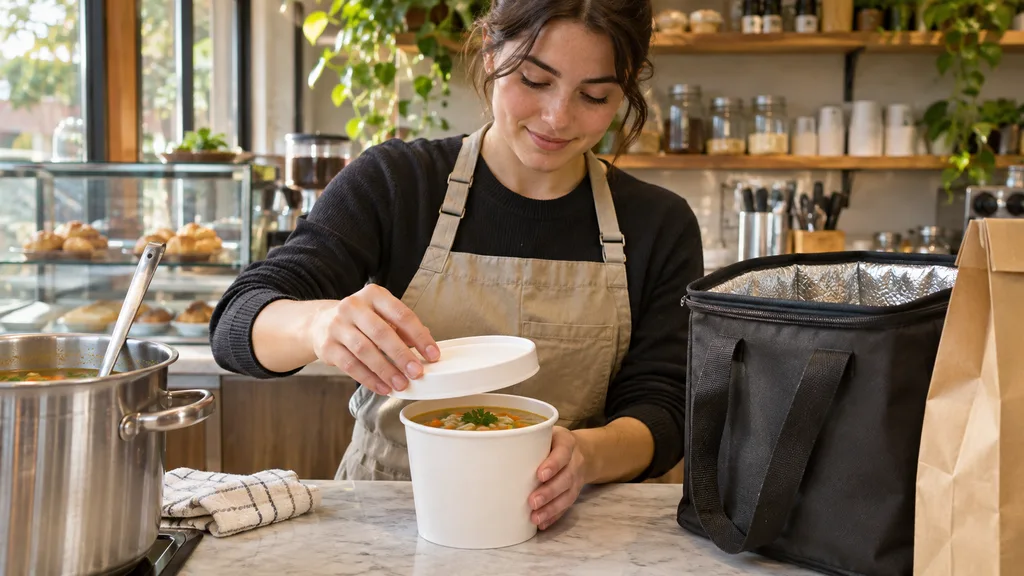
Choosing soup containers for takeout is less about finding the biggest cup and more about matching the container to the food, the serving, and the trip. Cafés, delis, small restaurants, caterers, and home hosts can use the same simple process to reduce messy handoffs and keep packing consistent.
Quick answer: Select a container that holds the actual soup portion with room below the rim. Confirm that its material suits the food and intended temperature, pair it with the correct lid, and test a filled sample in the same bag you use for pickup or delivery. Order a quantity that matches your realistic weekly demand.
Why Soup Packaging Deserves Its Own Checklist
Soup moves in a way sandwiches and bakery items do not. A bump, sharp turn, or tilted bag can send liquid toward the lid. Thick chili may push against the rim; a light broth can escape through a tiny gap. Packaging has to help staff fill, close, carry, and hand off each order with care.
Step 1: Match Container Size to the Soup You Serve
Start by measuring the portion customers actually receive. Use the same ladle or scale you use during normal service, then fill a sample container to a sensible level. A container’s stated ounce capacity is not an instruction to fill it to the brim. Soup needs space for closing the lid and for movement in transit.
Small, Regular, and Hearty Portions
Smaller containers can suit tasting portions or a cup of soup alongside a sandwich. A 12 oz option may fit a modest individual serving, depending on the menu and how much headspace you leave. Larger sizes are worth exploring for substantial meals, chunky stews, or family-style orders. These are planning examples, not universal restaurant portion standards.
Step 2: Leave Room Below the Rim
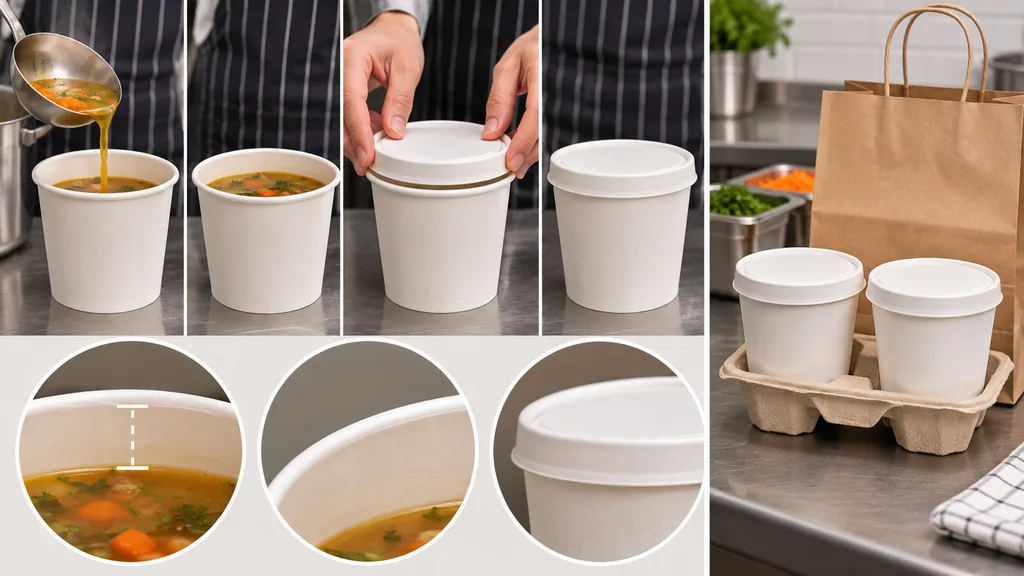
Headspace is one of the easiest details to overlook. When soup touches the sealing surface, even a correctly matched lid may not close cleanly. Leave enough room so the lid can seat on a dry, clear rim. The amount depends on the container design and the thickness of the soup, so use a real fill test rather than a fixed guess.
Wipe the rim before closing. Check for stray noodles, herbs, or sauce that could interrupt the seal. Do not squeeze or bend a paper cup to force on an ill-fitting lid. If the regular serving will not fit comfortably, adjust the portion specification or move to a larger approved container.
Step 3: Treat the Lid as Part of the Container
A soup container is only as useful as the lid that goes with it. Before ordering a full case, confirm that lids are included or sold separately, and that the exact lid model matches the cup. A similar-looking diameter does not guarantee a reliable fit across different brands or product lines.
Practice closing the lid while the cup sits on a flat surface. Press around the full edge as directed, then gently lift and inspect it. Look for uneven gaps, warped rims, or a lid that lifts easily. Repeat after handling a warm filled sample, because heat and moisture can change how materials feel.
Step 4: Check Paper, Coatings, and Heating Instructions
Paper soup cups often include a protective lining or coating to handle moisture. That does not make every cup suitable for every use. Look for the seller’s instructions for hot filling, refrigeration, freezing, and reheating. The U.S. Food and Drug Administration’s food-packaging guidance explains that food-contact materials are evaluated for their intended conditions of use.
A listing may describe a paper container as microwave-safe while its plastic lid is not. Follow each component’s instructions separately. The featured 12 oz product specifically says to remove its lid before microwaving the cup. More broadly, USDA microwave guidance says to use only materials labeled for microwave use.
Do not infer that a plastic-lined paper cup is recyclable, compostable, or plastic-free simply because it looks like paper. Rules vary by material and local collection program. The EPA’s recycling guidance recommends checking which containers a local program accepts, especially when food residue is present.
Step 5: Pack Soup for the Real Trip
Keep soup containers upright on a stable base. Use appropriately sized bags or carriers so cups do not slide freely. Separate hot soup from cold items and foods that should stay crisp. If several cups share a bag, arrange them so their rims are not pressed by other packages; use dividers when needed.
Run a simple trial with a filled sample: close the lid, place it in the actual carrier, walk a realistic route, and check for wet spots or loosening. For safety, avoid intentional tipping of hot soup. Repeat the test whenever you change container sizes, suppliers, lid types, or packing materials.
Keep Soup Safe, Not Just Neatly Packed
A tight lid is not a substitute for temperature control. According to USDA takeout-food guidance, hot food that will not be eaten immediately should be held at 140°F or above; perishable food should not stay at room temperature for more than two hours, or one hour when the ambient temperature is above 90°F. Use a food thermometer and an appropriate food-safe holding process.
A Practical 12 oz Example on TurtlesEgg
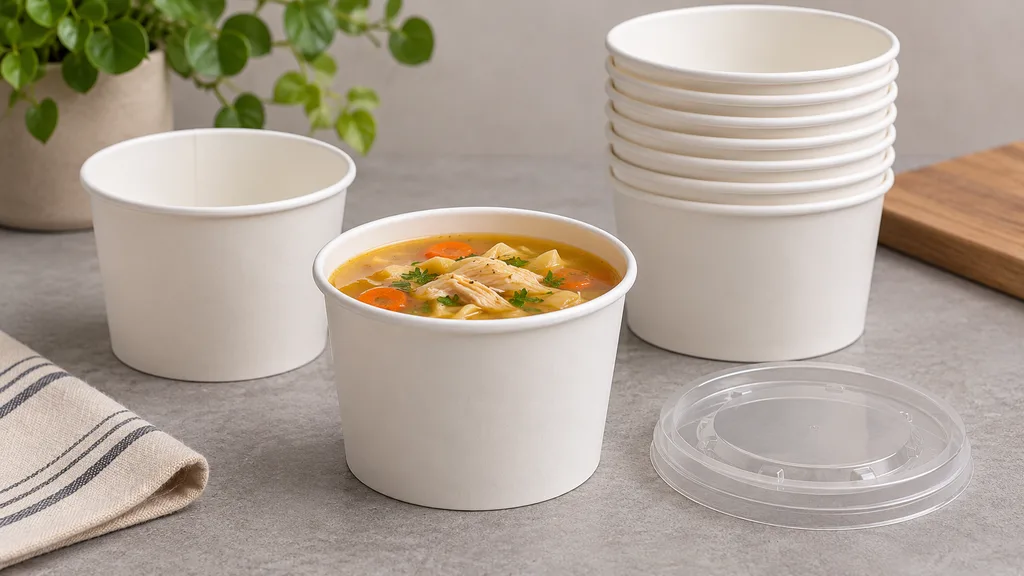
For teams comparing soup containers for takeout, the 12 oz disposable white paper soup containers with plastic lids, 25-piece pack from EcoQuality Inc. give a concrete reference point. The seller lists a paper cup with a protective poly coating, intended for hot or cold foods, plus plastic lids. It also provides measurements: 2¾ inches high, 3 inches across the bottom, and 3⅞ inches across the top.
The listing describes the cup as microwave-safe, with an instruction to remove the lid first. That matters when customers ask whether they can reheat leftovers. Do not assume the plastic lid is microwave-safe, or that every other paper soup cup has the same properties. These are seller-stated specifications, not a substitute for kitchen testing.
Step 6: Estimate How Many Containers You Need
Start with soup orders, not total restaurant orders. Note the number of soup portions sold on ordinary weekdays, busy weekends, and during catering events. Multiply your planned servings by the number of containers per order, then add a sensible allowance for damaged cups, tests, and unexpected demand.
Keep Toppings and Sauces Separate
Croutons, crunchy onions, chili oil, grated cheese, and dressings can travel better in separate small cups. This prevents toppings from becoming soggy and gives customers control over when to add them. The related TurtlesEgg guide, How to Choose Portion Cups for Takeout, explains how to compare condiment sizes, lids, and pack quantities without overpacking the main meal.
A Quick Buying Checklist
- Measure the real serving in the proposed cup and leave appropriate headspace.
- Confirm the exact lid match, closure method, and whether lids are included.
- Check approved food-contact uses, hot-fill suitability, and reheating instructions.
- Test one filled sample in the actual pickup or delivery bag.
- Plan quantities around soup orders and check the complete cup-and-lid count.
- Avoid unverified claims about leakproof performance or disposal options.
Frequently Asked Questions
Is a 12 oz container a good size for soup to go?
It can be a good starting point for an individual cup of soup, but the right size depends on the menu portion and how much room you need below the lid. Test the measured serving rather than assuming that a 12 oz label means it should be filled to the edge.
Are paper soup containers safe for hot soup?
Choose containers explicitly intended for your food and serving temperatures. Read the seller or manufacturer’s hot-fill guidance and test how the cup performs. A paper appearance by itself does not establish a safe temperature range.
Can customers microwave soup in a takeout cup?
Only when the particular cup is labeled suitable for microwaving, and only according to its instructions. The featured EcoQuality listing says to remove its plastic lid first. For any unfamiliar container, transfer the soup to a microwave-safe bowl.
What is the best way to prevent soup spills during delivery?
Use a correctly matched lid, avoid overfilling, keep the sealing rim clean, and carry the container upright in a stable carrier. Perform a normal-route packing test before relying on a new style. No ordinary takeout cup should be described as guaranteed spill-proof.
How many soup containers should a small café buy?
Base the order on measured soup sales, upcoming catering commitments, and storage space. A 25-piece pack is one possible starting size for trialing a product; higher-volume kitchens may need a different replenishment approach.
Choose Packaging That Fits the Meal
A thoughtfully packed soup order is simple for a customer to carry and easy for staff to repeat. Begin with portion size, then confirm the lid, material instructions, filling method, and transport setup. A brief test can save more frustration than a long list of marketing promises.
Compare the EcoQuality 12 oz soup container listing on TurtlesEgg, explore the EcoQuality Inc. seller storefront for other food-service supplies, and use the related portion-cup guide when sauces or toppings need their own container.
Helping communities, one business at a time.