
You spot a pair of brown leather boots that would look great with your favorite jeans. They seem easy to wear, but then the practical questions begin: Will they feel comfortable after a commute? Will the zipper close easily? And will the soles suit the sidewalks you walk on every day? Those details deserve as much attention as the color.

Choosing women’s leather boots for everyday wear is really about balancing fit, convenience, weather, outfit choices and upkeep. A well-matched pair should work for your actual routine, not just look appealing in a product photo. Use this guide to compare styles confidently without assuming that every leather boot offers the same support or protection.
Quick answer: Start with the shoes you will wear most often and the socks you normally use. Check toe space, width, heel hold and ankle comfort. Then compare boot height, fastenings, outsole pattern and material-specific care. A side zipper can make everyday dressing easier, but the full fit matters more than the closure style.
Start With Your Real Daily Routine
Before comparing brands, think about a normal weekday. Do you walk from a parking garage to an office, spend hours shopping, commute by public transportation, or alternate between indoor work and outdoor errands? The answer changes which features matter most.
Step 1: Get the Fit Right Before Judging the Style
Start with length and width, but do not stop at the size printed on the box. Different shapes can fit differently even when the label is the same. Your toes should have room to move, the widest part of your foot should not be squeezed, and the boot should hold your heel without painful rubbing.
The American Orthopaedic Foot & Ankle Society’s shoe-fitting checklist suggests checking the toe box, shoe depth and heel movement while standing and walking. A little space beyond your longest toe is sensible, but there is no need to buy a boot that slides around just to create extra room.
Try both boots late in the day if possible, when feet may be a little larger. Walk on a safe, clean floor, turn, and go up a step. Notice pressure along the ankle opening, across the instep and beside any zipper. Never rely on a painful boot magically stretching into the right shape.
Use Your Usual Socks During the Fit Test
Sock thickness can noticeably change how a boot feels. A thin everyday sock and a cushioned winter sock occupy different amounts of space, particularly around the toe and instep. Try on the boots with the socks you actually expect to wear; the Royal College of Podiatry’s footwear guidance recommends this for accurate fit decisions.
If you are comparing different cushion levels, TurtlesEgg’s guide to women’s athletic socks explains why sock thickness, heel fit and fabric choice matter inside shoes. That guide focuses on athletic socks, but the reminder to check sock-and-shoe fit together is useful here too.
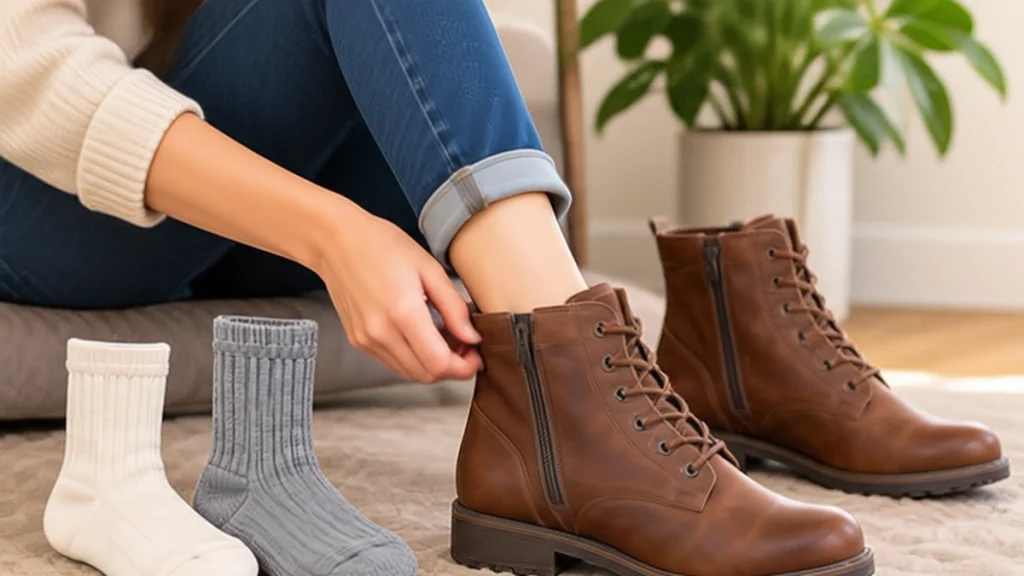
Step 2: Choose a Height and Shape You Will Actually Wear
Ankle boots often pair easily with straight-leg jeans and casual trousers. Mid-height boots add more coverage around the lower ankle and can create a slightly more structured look. Taller boots may work better with skirts or colder-weather outfits, but their shaft width and calf fit also need attention.
Look at the toe shape, too. A narrow pointed toe may give an elegant silhouette but feel cramped on a wider foot. A rounded or softly squared toe may provide a different fit, depending on the actual last used to build the shoe. The best shape is the one that looks right and still lets you move naturally.
Step 3: Compare Side Zippers, Laces and Pull-On Designs
Closures change how boots fit into a busy morning. Side zippers are convenient when you want to put boots on quickly. Laces usually offer more ways to adjust tension over the instep and ankle. Pull-on styles keep the exterior simple but need an opening and stretch panels that suit your foot shape.
For a side-zip design, close and open the zipper several times before committing. It should travel smoothly without catching the lining or pressing sharply into your ankle. Check whether your foot stays comfortably in place after you zip it up; an easy zipper cannot compensate for a poor fit.
Step 4: Look Closely at the Sole and Heel
The sole deserves more attention than it usually gets in online photographs. Turn the boot over and look for tread that matches the surfaces you use. On ordinary sidewalks, a stable contact area and sensible flexibility can be more useful than an aggressively rugged appearance.
A visible tread pattern does not prove certified slip resistance, and an everyday fashion boot should not be treated as an ice boot or safety shoe. If your routine includes wet weather, steep paths or winter conditions, seek footwear specifically designed and described for those demands.
Consider heel height as well. A small, broad heel may feel different from a narrow or elevated one, especially during long walks. Test the boot rather than assuming that every flat sole is comfortable or every chunky sole provides excellent grip. The REI footwear-fit guide reinforces the importance of evaluating footwear for the intended conditions and confirming fit in person when possible.
Step 5: Understand What Leather Does-and Does Not – Promise
Leather can develop character with regular wear, but the word ‘leather’ alone does not tell you about the finish, lining, waterproofing or exact care routine. Smooth leather, suede, nubuck and treated leather can react differently to moisture and cleaning products.
Read the product details for the actual material and any stated weather features. Do not assume that a brown leather upper is waterproof, stainproof, or unusually durable. Those are specific claims that require evidence from the individual product listing.
An Everyday Example: Timberland Whittemore Mid Side-Zip Boot
Consider the Timberland Whittemore Mid Side-Zip Boot in Brown Leather for women. Its product name describes a brown leather style with a mid-height design and side-zip entry, making it a useful example when thinking about convenient everyday footwear.
However, the name alone does not establish cushioning, waterproof performance or outsole specifications. Check the current TurtlesEgg listing for those details, available sizes and the return policy before making a decision. You can also browse the TurtlesEgg footwear collection to compare styles.
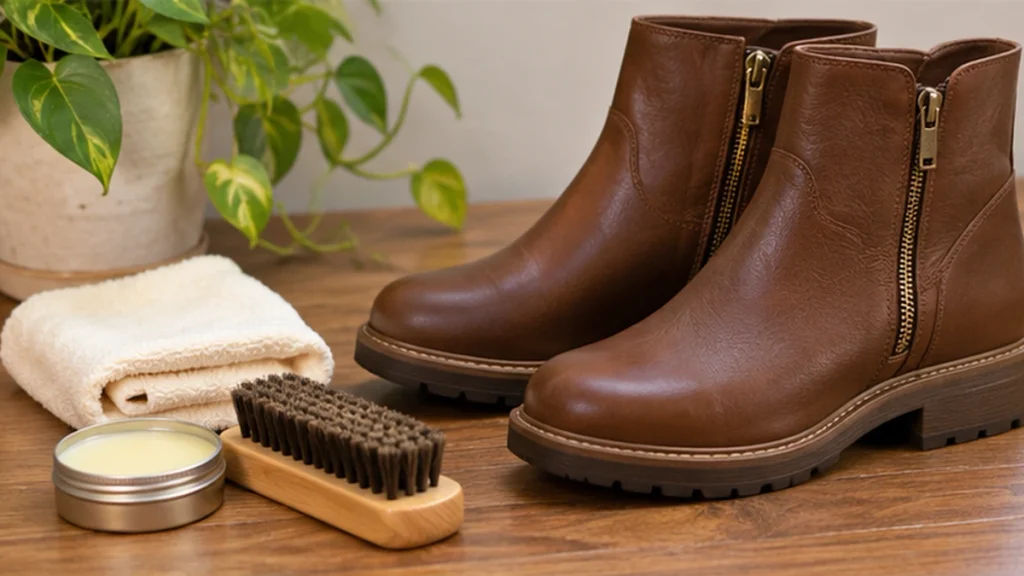
Step 6: Make Leather Care Part of Your Buying Decision
A pair you can maintain with a simple routine is often more practical than one that needs care you will never have time to give. Brush away loose dirt, follow the maker’s instructions for the specific leather finish, and let damp boots dry naturally rather than placing them beside direct heat.
Timberland’s boot-cleaning guide distinguishes leather from suede and nubuck and recommends selecting cleaning methods for the actual material. Its product-care page also explains why treatments for waxed or oiled leather should not automatically be used on suede or nubuck.
How to Style Brown Leather Boots Without Overthinking It
Brown boots can look relaxed with straight-leg jeans, a simple T-shirt and a cardigan. They can also work with darker denim and a knit sweater when you want a tidier weekend outfit. For a more polished casual look, try tailored trousers that fall neatly over the shaft rather than bunching around the zipper.
A Quick Checklist Before You Buy
- Fit: Check length, width, toe room, heel hold and ankle contact with your usual socks.
- Closure: Test the zipper, laces or pull-on opening for comfortable entry and secure wear.
- Sole: Check tread, stability and heel height for your actual walking surfaces.
- Materials: Confirm the leather finish, lining, weather claims and recommended care.
- Practical details: Review size guidance, clear product photos, return terms and current availability.
Frequently Asked Questions
Are leather boots suitable for everyday walking?
They can be if the specific pair fits properly and its sole, weight and shape suit your routine. A good-looking leather upper does not automatically make a boot right for long-distance walking. Test the full boot, not just the material.
Are side-zip boots better than lace-up boots?
Neither is automatically better. Side zippers can make dressing quicker, while laces usually allow more adjustment. Choose based on fit, ease of use and the way the boot holds your foot during movement.
Should I size up for thick socks?
Not automatically. Try the exact socks you plan to use, check for toe and instep pressure, and follow the brand’s size guidance. A size that accommodates thicker socks but lets your heel slide may still be wrong.
Does leather mean a boot is waterproof?
No. Waterproofing depends on the full construction and any specific treatment or membrane. Only rely on a waterproof claim when it is clearly stated and supported for that model.
How often should I clean leather boots?
Clean off dirt when you notice it and use appropriate care products according to wear, weather and the leather finish. Check the manufacturer’s instructions instead of following one routine for every type of leather.
Choose Boots That Work Beyond the First Outfit
If you are comparing styles, review the featured Timberland boot or browse the TurtlesEgg footwear collection and check current listing details before buying. A few extra minutes spent on fit, sole design and care instructions can help you make a more confident choice.
Helping communities, one business at a time.